
I wanted to write this for Canada Day 3 days ago, but I lost track of time so I am posting it today (which ironically is American Independence Day, Lol! Happy Independence Day to our American neighbors!) I also want this post to segue into a series of articles that will explore Canadian history. This is a question often asked by Canadians. Even many fourth year Canadian university students and professors often have difficulty giving a specific answer. I will attempt to define the core, historic Canadian culture off the top of my head. It may help to take a look at the Canadian Red Ensign, which is Canada’s former flag (and which I honestly like far better than today’s flag) and its coat of arms in answering this specific question.
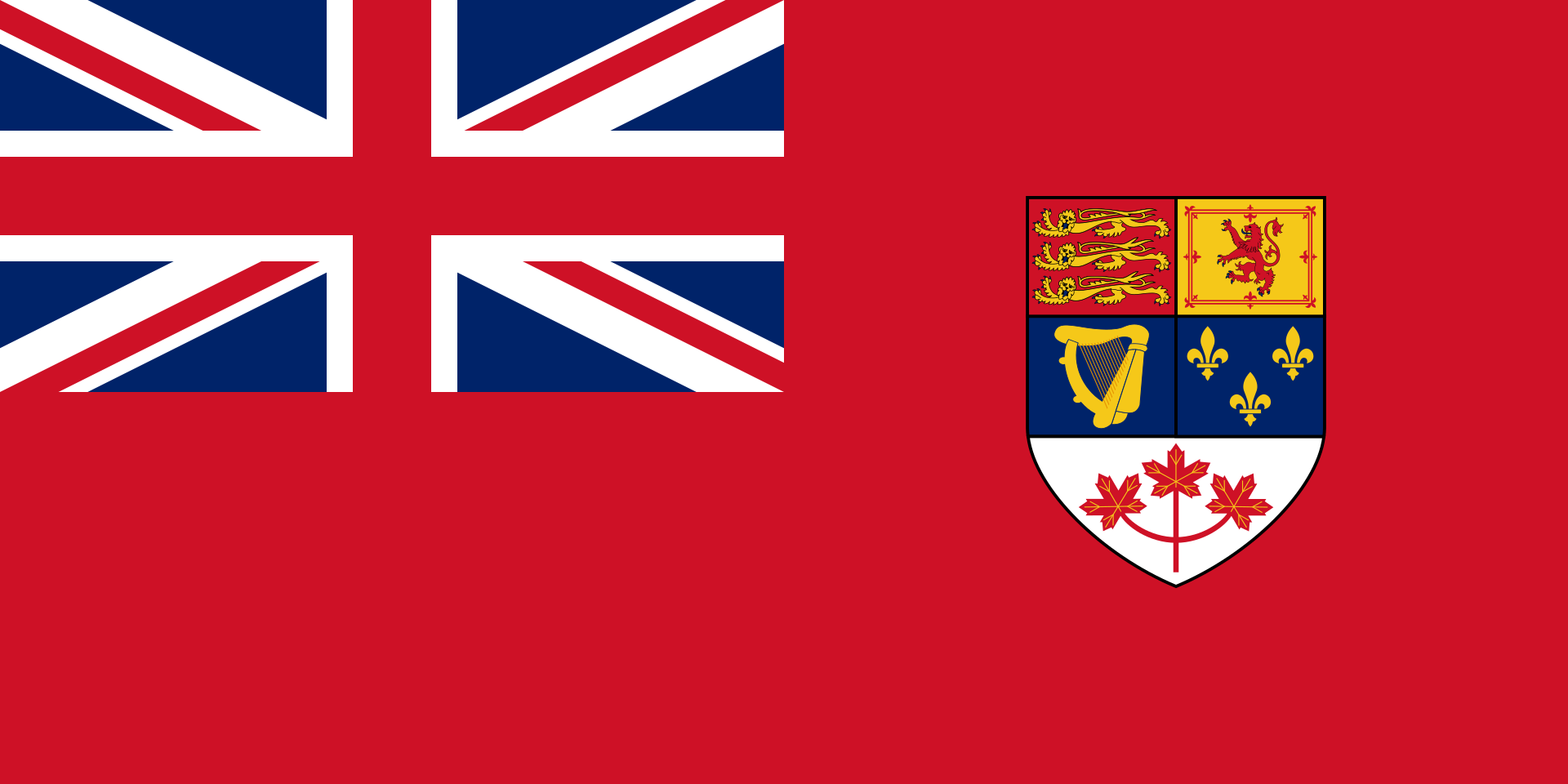

At its core, Canada has the British and French cultures, but in a New World that is not Britain or France. We could see this in the shield that is present in both the coat of arms and the Ensign, showing the three maple leafs, representing the land that the British and French inhabit. The coat of arms shows flags representing these two cultures. But the British influence dominates, as shown by the Union Jack on the upper left hand corner of the Ensign. The different British cultures of the English, Scottish and Irish are represented in the shield as the Three Lions, the Red Standing Lion, and the Harp respectively, while the fleur-de-lis represents the French. We have the Parliamentary Westminster system, we have the Queen as our figurehead, represented by the Governor-General. This is shown as the crown towering over the coat of arms, and perhaps also as the lion and unicorn holding the shield, representing the English and Scottish crowns which have been united since 1603. We have European architecture, including the Gothic Revival style with examples seen in the Parliament Hill buildings in Ottawa, or the University of Toronto’s Hart House. We have the Mounties. We invented the game of hockey. We have a love of the land and environment. We could take the lumberjack in BC, the farmer in the Prairies, or the fisherman in the Maritimes. All these people work the Canadian land.
But we cannot forget the indigenous people of Canada, the First Nations, who have called this land their home for millennia and made their own contributions. We could think of the canoe, the kayak, the longhouses. The invention of lacrosse. The Iroquois Confederation was a rudimentary state and in some ways democratic. The name “Canada” itself is an indigenous word meaning “village”. Other than the landmass, the presence and contributions of the indigenous people to Canada set us apart from Europe itself. This trinity of maple leafs may also be said to represent the British, French and indigenous people.
Of course many immigrants not of these cultures have come and continue to come into Canada, earning citizenship and making their own contributions: Germans, Scandinavians, Italians, Portuguese, Poles, Ukrainians, Arabs, Pakistanis, Chinese, Indians, Filipinos, etc. I myself am the son of Mexican immigrants. But the Canada we have come to has a historic core culture that is composed of these things.
 diegodelaparra
Leave a comment