
At the end of the war, Canada had plentiful wealth and was in a powerful position. Anxieties of a postwar decline and large-scale unemployment were shown to be unwarranted, as the industrial war apparatus, designed by C.D. Howe, the federal Munitions and Supply Minister, was smoothly shifted to regular, peacetime use.
Not only did the war fuse Canada’s investment and trading structures into the North American network, it had also to a new form successfully implemented John A. Macdonald’s old “National Policy”, which federally stimulated the industrial progress of central Canada through utilizing the resources of the nation’s other areas. The outcomes were remarkable. Canadian standards of living increased rapidly in sync with the rest of the continent.
Simultaneously, the federal government’s strength grew unprecedently. Equipped with the taxing and spending powers that the provinces had provided during the war, Mackenzie King’s Liberal government began to develop the Canadian welfare state. Old age pensions and unemployment insurance were enlarged, and federal-provincial welfare programs increased fast.
Throughout the 1950s, Canadian public life stayed solid. Ottawa’s Liberal government, now led by the Quebecois Louis St-Laurent, kept winning elections with a coalition having key support in Quebec and the West.
Under the ongoing leadership of C.D. Howe, government and private American investment merged with Canadian business to quickly grow Canada’s industry and resource branches. The federal welfare minister Paul Martin led the expansion of increasingly well liked social programs, with tax-paid public healthcare created in some provinces. Future Prime Minister Lester Pearson used Canada’s international reputation to earn it influence in international organizations like the United Nations. His advocacy for the debut deployment of UN peacekeeping soldiers – the famous “blue helmets” of the world’s conflict areas – in the 1956 Suez Crisis earned him the Nobel Peace Prize.

Despite the 1950s stability in politics and public culture, Canada was being changed by strong influences. Between 1946 and 1961, the population grew 50 percent to 18 million people, with around 2 million people arriving in the nation’s largest immigration influx. Southern and Eastern Europeans arrived in cities, changing urban Canada.
Canada became one of the planet’s most urbanized countries, with 77 percent of the population living in urban regions by 1961. Social and cultural flexibility was fostered by television and other mass media, mass marketing and suburbanization. Women saw a dynamic shift in their societal place throughout the 1950s, becoming more prominent in the paid work sector.
The 1960s upheavals: The surprise victory of John Diefenbaker’s Progressive Conservatives in 1957 foreshadowed the great political and cultural changes of the 1960s. His minority victory, achieved through chipping away at Liberal support in urban Ontario and the west, turned into a majority landslide win the next year when Quebec’s conservative government gave him the province. Despite Diefenbaker’s tenure in office, which ended in 1963, not being able to alter Canada’s political forces, it was the prelude to a speeding change.
In 1960, an important provincial election in Quebec was won by a Liberal government with new ideas for the province. Quebec had gone its own way for several decades, significantly different from the winds of transformation sweeping the West. The bastions of Quebecois society – a localist government, a strong Catholic Church, and a prominent Anglo-Saxon entrepreneurial elite – were to be drastically changed in what would be termed la revolution tranquille. With the mantra “maitres chez nous” (masters in our own house), Jean Lesage’s government shifted the management of the health and education sectors from the church to the provincial government, and strongly supported the expansion of a French-speaking state branch to compete with the Anglo business establishment.
The Quiet Revolution loosened social passions which moved in two contrary paths, both having profound sources in Quebec’s political customs. Some wanted to give a self-assertive Quebec stronger clout in national politics, to endow the federal government with “Quebec Power” in order to provide Quebec with all of the boons of modern Canada growing around it. Montreal intellectual Pierre Trudeau, who disliked what he believed was the insular-looking nature of Quebec nationalism, would end up as the model of this movement. Others believed that Canadian federalism was ill-equipped to deal with Quebec’s special needs for cultural preservation, and wished for an independent nation-state to achieve Quebec’s wishes. The separatist campaign was the brainchild of radical thinkers and traditionalist folk singers, but it earned more standing as more prominent believers joined, especially Rene Levesque, who had worked as a minister in the Lesage cabinet and would later serve as Quebec’s first separatist premier from 1976 to 1983. The differentiation of federalism and separatism has been an ongoing influence on the province.
Quebec’s increasing resolve quarreled with the surging activism of the federal government, which was once more Liberal under Lester Pearson from 1963 to 1968 and aspired to keep expanding the welfare state through endeavors like a national medicare system. In 1965 there was a large issue over whether the government would bestow Quebeckers with public pensions. The province came out on top, leaving the national income tax collection and pension plans and using its new pension money to invest in Quebecois businesses and support French entrepreneurial interests.
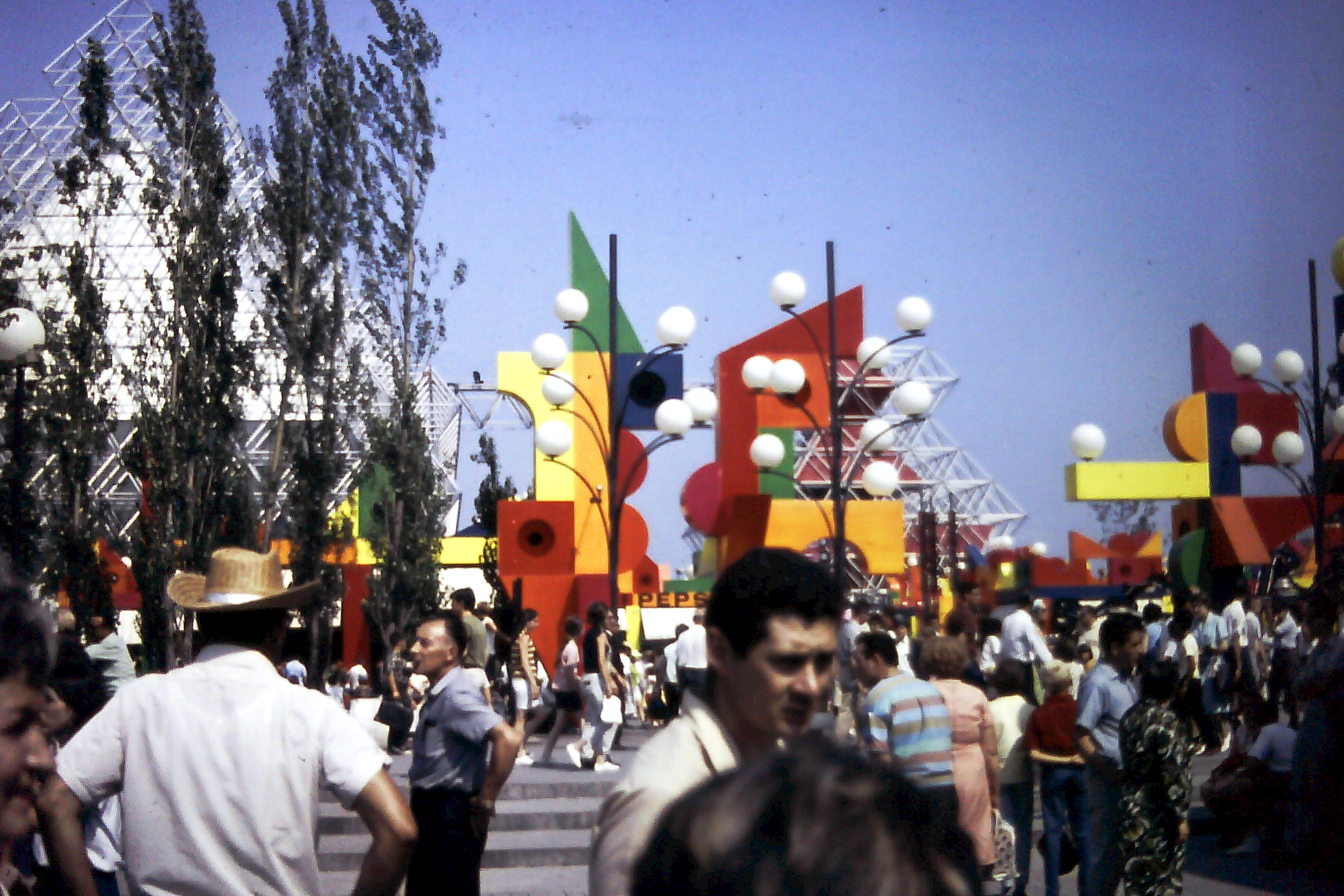
During the early 1960s Quebec’s social fervor may have been more politicized than the rest of Canada’s. Anglo Canada and the United States enjoyed ongoing prosperity and an increasing awareness of advancement and modernity throughout much of the decade. This peaked with two occurrences: Montreal’s 1967 world fair where the century-old Canada hosted a favorable world, and the 1968 election of the suave and voguish Trudeau. But at the same time, the trends of philosophical dissatisfaction that swept the West during the mid-to-late 1960s found a place to settle in Canada. Canada was not left out of the boisterous “cultural revolution” of the era and all its associated phenomena – student activism, extensive divorce, the sexual revolution the, emergence of feminism – even though it had the common touch of typical restraint. The main popular musicians of this era in Canada were singer-songwriters like Joni Mitchell, Neil Young and Leonard Cohen – and while not as noisy as Janis Jopin of Jimi Hendrix, they were more reflective and were still at their prime.
The fervor ended in misfortune as elsewhere, when the militant separatist group called the Front de la Liberation du Québec abducted the British diplomat James Cross and the Quebec Minister of Labour Pierre Laporte in October 1970. In response, the federal government implemented martial law – which got majority support at the time and appeared to be justified when Laporte’s body was discovered, but has since been considered a frightened overreaction. This incident ended when Cross was freed and the terrorists fled to Cuba. Canadians felt somewhat traumatized by the “October Crisis”.
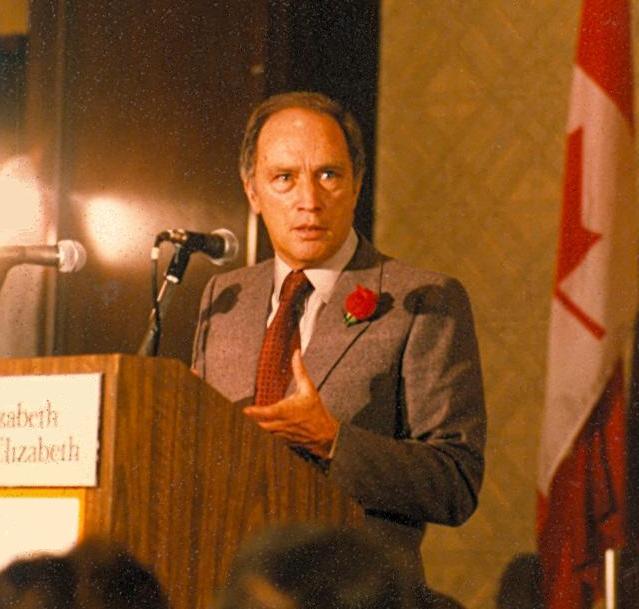
The 1970s tensions: The 1970s were crucial for Canada. “Stagflation” (minor growth, major inflation and unemployment) was only one display of what appeared to be an unfair change of the basic principles which had grown Canada. The social shifts of the ’50s and disruptions of the ’60s left Canada – like many Western countries – with a penetrating feeling of disorder and apprehension throughout the ’70s. While politicians and pundits debated such themes as growth limits, “the revolution of rising expectations” and Trudeau’s reinforcement of the state, public interests scoured energetically through a wild series of trends. Canadians were primed for American imports like the truckstop lifestyle of Citizens’ Band radio, the gentrification and renovation of former slums in cities, and most prominently, the soignée hedonism of the coke-indulging discotheque. The national itching for an exciting event appeared to be strangely fulfilled when the PM’s spouse Margaret Trudeau ditched her position as first lady for a stylish life of merrymaking with Keith Richards and the precincts of Studio 54 in New York.

Three critical occurrences molded and imitated this feeling of disturbance, fracturing the fundamental system of Canadian life and putting Canada’s very existence in danger. The first was the 1973 oil crisis, and the conclusion of the “Long Boom” that had changed the nation and the world after the war. The 70s saw the deceleration of the Canadian economy, as it was contorted by double-digit inflation and continual unemployment began. This weakened a foundation of Canadian politics – the apparently endless ability of governments to tax and spend to redirect wealth and invest in enhancing living standards. Taxes and spending kept growing, but a chasm was opened up between government revenues and expenses, which has grown and grown. In time, this turned the direction of the continual competition between the provincial and federal governments. While since the war they had competed for political recognition for the implementation of new programs, they now turned to blaming each other for deteriorating service qualities and unabating budgetary deficits.
The second key event was linked to the oil crisis. The growth of western Canada, which had been an economic backwater for years, radically changed national politics. Western provinces with lots of oil and gas contended with the old National Policy of Macdonald and its prioritization of central Canadian industry. The western governments started to join with an even more confident Quebec to earn more influence for the provincial governments. Prime Minister Trudeau skillfully bypassed these pressures by pleading to citizens’ feelings of Canada as a whole, and deftly using his own reputation in a Quebec that was becoming more restless.
The third central occurrence of the decade was the November 1976 election of Rene Levesque’s separatist Parti Quebecois government in Quebec. While the PQ’s manifesto stressed good government rather than separatism, Levesque proposed a provincial referendum in May 1980. 41 percent of voters voted “Oui” and 50 percent voted “Non” to the government’s proposal for authority to negotiate separatism.
Trudeau dynamically inserted himself in the referendum, vowing Quebeckers a “renewed federalism” if they stayed in Canada. He particularly swore to “repatriate” Canada’s Constitution so that it could be revised without British approval, and include a Charter of Rights and Freedoms. This plan was widely supported, and it gave Trudeau the ability to create a Constitution Act that was declared in 1982. But that Act moved forward over Quebec’s furious protests, which had been ignored in the federal-provincial arrangement that had resulted in repatriation.
When Trudeau resigned in 1984, he could be happy with some strong accomplishments in his 16 year-tenure (interrupted only by the Albertan Joe Clark and his Progressive Conservatives for nine months when they had won a slim electoral victory, but had been defeated the next year after his budget failed to pass the House of Commons). But Trudeau’s wish to be remembered for having a powerful federal government leading a united nation appeared to be more elusive. Federal-provincial relations were bitter, westerners more left out of national matters, and Quebec sour over being kept out from the constitutional deal. In addition, the Canadian economy had drastically slowed down under Trudeau, whose state intervention policies had not been too fruitful. Even worse, the annual federal budget deficit had soared to an almost unmanageable amount, greatly constraining the federal government’s power and its capacity for choosing.
Prosperity and regionalism: The last Trudeau government’s dismal financial performances were largely owed to the big recession that hit Canada’s economy in 1981 and 1982. The country’s unemployment rate grew to 11 percent. The Liberals, who had governed Canada for 42 of the last 49 years, were not let off the hook for this. English Canada voted for the Progressive Conservatives under their new leader, Quebecker Brian Mulroney, out of anger with the Liberals and a desire to attempt his light style of neo-conservatism. But what delivered Mulroney victory was a historic switch in Quebec, which had not seen Tory prominence since the 1890s. Mulroney leveraged the sense of betrayal that the Quebecois felt over the 1981 constitutional accord, swearing to make revisions to the Constitution that would honorably and enthusiastically include Quebec in the Canadian family. For this Mulroney earned the biggest electoral victory in Canada in seats (his 6.3 million vote record was beaten by Justin Trudeau’s 2015 victory), winning 211 out of 295 seats in the House of Commons.
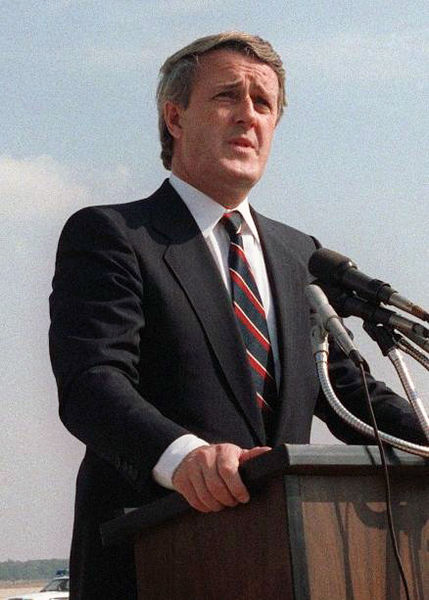
The massive 1980s boom left Mulroney the opportunity to deal with the issue of Canadian deficits, which his western supporters were very worried about. Despite him not addressing this as well as he could have, the era’s massive prosperity hid the nation’s financial issues. For the majority of the nation, the icons of the 1980s were skyrocketing property values, advanced cars and stylish restaurants. But the boom never arrived for several Canadians and some regions. Unemployment stayed sizeable, rural and Atlantic Canada remained in a downturn, and the homeless became an attribute of the cities.
But there was enough optimism to secure Mulroney re-election on a manifesto of free trade with the United States. The 1988 election turned into a contest between cultural and economic “nationalists” whose votes were split between the NDP and the Liberals, and “free traders” in Quebec, industrial Ontario and the West who, in lockstep with large entrepreneurial interests, granted the Conservatives a renewed 168-seat majority.
Although it was never an election topic in 1988, Mulroney’s Quebec policy was leaving many Canadians uneasy. It appeared that he had kept his promise to modify the constitution with the April 1987 Constitutional Accord signed at Quebec’s Meech Lake. There, all 10 premiers and the federal governments approved the amendment of the constitution to grant Quebec five insistences, among them the legal acknowledgement of the province as a unique society. The federal and provincial legislatures’ deadline to approve the Accord was June 23, 1990, but the election of new governments in New Brunswick, then in Manitoba and Newfoundland brought difficulties, as these governments expressed second thoughts. Women were also afraid that their rights would be undermined. Natives objected that their constitutional issues had been disregarded. Canada’s recent immigrants, who now composed one-third of the country’s population, were also concerned about their rights.

In addition, Premier Robert Bourassa, bending to Quebecois nationalist desires, instituted a law prohibiting the use of English on signs. This was a central event in forming objection to the Accord. Thousands of English Canadians who normally didn’t care about constitutional subtleties started to voice concerns that Meech Lake would divide the nation and be too generous to Quebec. When a final effort to negotiate the Accord failed, Quebeckers were furious about what was in their eyes another constitutional “humiliation” from the other provinces.
The messy nineties: If Canada was upset by the brinkmanship and shadiness of the Meech Lake affairs, it would be even more upset by the economic occurrences of the 1990s. The nation’s economy was immersed in a recession longer and more profound than any since the Great Depression. Free trade’s effect on the weaker parts of Canada’s economy, a high interest-rate policy to deal with the inflation of the later 1980s, the adoption of a confidence-ruining value-added tax in 1990, and an international reorganization of industrial economies merged with immense force, especially in the industrial core of central Canada (the west was mostly left alone).
Unemployment reached 11 percent and remained that amount. Property values collapsed and thousands of businesses closed. The years of economic growth of the 1980s immediately began to be seen as simply a limited five year period prior to a decline of comparable magnitude.
In this problematic environment, Quebec objected furiously to the Meech Lake Accord’s failure. Premier Bourassa, perhaps biding his time, started a two-year procedure of surveying Quebec’s political options, such as separation. But the components of a new deal arose steadily. For the West, an elected body meant to give the regions more power relative to the federal government replaced the appointed Senate (mostly made up of party fundraisers). Quebec had revised forms of its five Meech Accord insistences added. Women’s and immigrant’s rights would be clearly reaffirmed, while the topic of native self-government would also be dealt with. This determined endeavour concluded with a second accord in August 1992. In October a nation-wide plebiscite was called to pass the Accord, and it needed a majority vote in all provinces. Six provinces voted narrow majorities, while four, among them Quebec, decisively refused it. This defeat put to rest all activity of constitutional revision. and after five months Prime Minister Mulroney resigned.
Having to deal with these issues, the federal political system bended. After constitutional rectification failed, Quebec had two choices: status quo federalism and the separation offered by the PQ head Jacques Parizeau. Lucien Bouchard, formerly a PC cabinet minister who had left after the Meech Lake debacle to start the separatist party Bloc Quebecois, was an energetic new leader for Quebec independence. The Bloc counted on the support of nationalist Quebecois who were former PC voters in 1984 and 1988, ending the Tory advancement in the province. Simultaneously, western Conservatives were also radicalized by not only what they viewed as a pro-Quebec bias in the PC party, but also with its lack of success in dealing with fiscal problems. They responded by shifting their allegiance to the new right wing Reform Party headed by Alberta’s Preston Manning.
The formerly strong New Democratic Party, which had made up a powerful third bloc in parliament, fell to the unpopularity of their provincial governments in British Columbia, Saskatchewan and Ontario. The woes of the left’s NDP, and the fracture of the right’s Mulroney coalition opened up a gap for the former Trudeau minister Jean Chretien and his Liberals. On October 25, 1993, he won 164 seats in the election. The Bloc Quebecois earned status as the official opposition, earning 54 out of 75 seats in Quebec. Reform earned third place with 52 (all but one Western). The NDP won seven seats and the Conservatives two.
Canada standing tall: If one is to find optimism in Canada’s situation, it is that Canada has historically been able to cope. Canadians have shunned radicalism. In addition, Canadians learned not to take prosperity for granted through the previous two recessions. Those who want their country to stay united have strong economic arguments to back them up.
But the pressures of disunity did not go away throughout the decade. Remaining with the options of the status quo or separatism, Quebec could have gone either way. And English Canada did not have much patience for this either. Ontario and the restless West simply wanted to be finished with the Quebec issue. “Let them go” has been a favored expression outside of Quebec; some prefer “kick them out”. This has masked an unraveling of Canada’s structure, once said to be “Ontario exploiting the West, bribing Quebec, and providing welfare to the Atlantic”. But by the 1990s, the foundations of the old National Policy unraveled. The central government’s strength was challenged by an emergent west and a confident Quebec while an impecunious Ontario, whose economic hinterlands were no longer reliable in a world with free trade, stubbornly gripped the status quo.
The rest of the planet could not understand Canada’s dilemma. Important industrialized countries were annoyed with such an absentminded medium power. Canada’s tampering with itself seemed insane to nations that could only dream of having Canadian wealth. The contest of economics absolutely did not care about Canada’s issues.
And yet the constant tumults at Canada’s unity remain part of this country. Creating a rich and good-natured nation on the harsh land that Voltaire once dismissed as quelques arpents du niege should be cause for self-respect from Canadians and respect from the rest of the world.
 diegodelaparra
Leave a comment