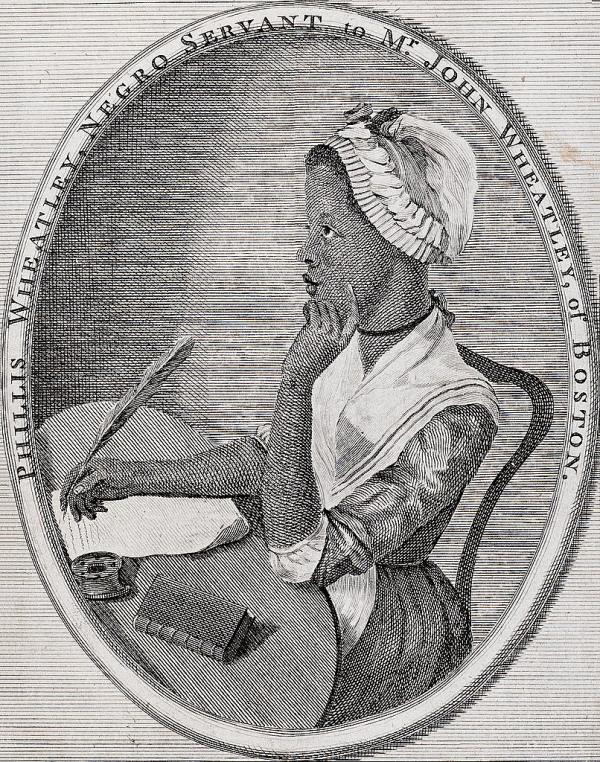
Phillis Wheatley was an American poet who was the first African American to get published. Her poem “To the University of Cambridge in New England” is addressed to students of that university, and she tells them of Jesus’ sacrifice and the promise for redemption. This poem affirms equality through the shared sin and salvation of... Continue Reading →
The Egyptian Response to the Napoleonic French Occupation
Napoleon, leading a French army, invaded and occupied Egypt in 1798. His justifications for the endeavour were to have a position to harass the British in India, to protect the interests of French trade and to bring science and liberal, Enlightenment values to Egypt. The French saw some early successes, yet just 3 years later,... Continue Reading →
“The History of the Kings of Britain” and “Utopia” as Fictional Unifying Narratives
Geoffrey of Monmouth’s The History of the Kings of Britain is a pseudohistorical narrative of the Kings of Britain published in 1136. It begins with the foundation of the British nation by Trojan exiles and continues for about 2000 years until the Anglo-Saxon invasion and the rise of King Arthur. Thomas More’s Utopia is a... Continue Reading →
Medieval Ireland Tourist Brochure
This brochure promoting tourism to Ireland is based on “The History and Topography of Ireland” by Gerald of Wales. What defined the work for me was Gerald of Wales outlining the benefits of Ireland’s natural features such as the climate and the air. I also liked how he praised the music of the native Irish... Continue Reading →
The Marvelous Christian Discoveries of St. John Mandeville
The word “marvel/marvelous” conjures up diverse meanings: in the 1300s, it would have meant a marvelous event outside of human power and nature and thus believed to be supernatural/divine. But it can also mean something wonderful or astonishing that causes someone to feel surprise, admiration or wonder (Oxford University Press). Something which is marvelous is all... Continue Reading →