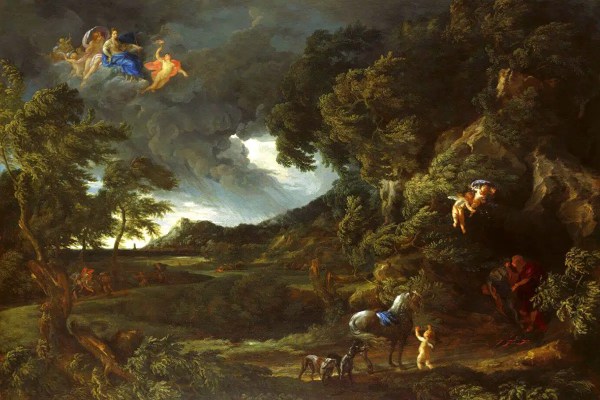
The Aeneid is an epic poem by Virgil that tells an origin story of the Romans and was Rome’s national epic. One of the most famous episodes of the work is Aeneas’ tragic affair with Dido, which ends with Dido’s suicide. This essay will argue that Aeneas’ staunch inclination to following his pietas most strongly... Continue Reading →
Secondary Source Review: Seasons and Similes in the Aeneid
This source is an article about how seasons are used as similes in the Aeneid, by George Fredric Franko of Hollins University. The audience for the article is people who have already read the Aeneid, because the author does not analyze the similes in the order they appear in the story. He looks at autumn... Continue Reading →
Love as a Maturing Feeling in 19th Century British Novels
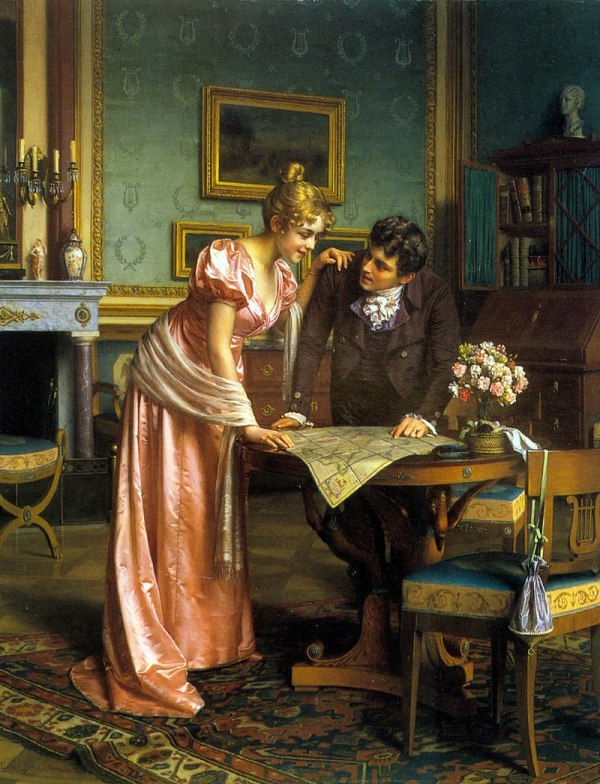
The English novels Emma, Jane Eyre and Middlemarch are all among the most famous of the 1800s and feature romances between main characters which are important for the story. Emma Woodhouse falls in love with George Knightley, Jane Eyre with Edward Rochester, and Dorothea Brooke with Edward Casaubon and then Will Ladislaw. These novels explore... Continue Reading →
Jane Eyre as Mr. Rochester’s Liberator
The novel Jane Eyre is a Victorian Gothic bildungsroman that explores the early life of the eponymous character. At eighteen Jane is hired by Mr. Rochester as a governess at Thornfield Hall. This essay will argue that Jane’s innocent, independent personality liberates Mr. Rochester from his mental enslavement at Thornfield Hall. Jane provides a glimpse... Continue Reading →
Emma’s Journey to Individual Maturity & Love
The novel Emma by Jane Austen explores the life of the eponymous young woman in the village of Highbury. Emma Woodhouse is 21 years old and respected in her community, but also inexperienced in the world. She is close to Mr. George Knightley, a family friend, whose younger brother is married to Emma’s older sister... Continue Reading →
The Role of the Jews in the Glorious Revolution
The Glorious Revolution was one of the most significant events in English history. It was the last successful invasion of England and saw the replacement of the Stuart monarch James II with his daughter Mary and her husband William of Orange, who became King William III. This paper will argue that Jews played a crucial... Continue Reading →
St. Martin of Tours as an ideal “miles Christi” for the late Middle Ages
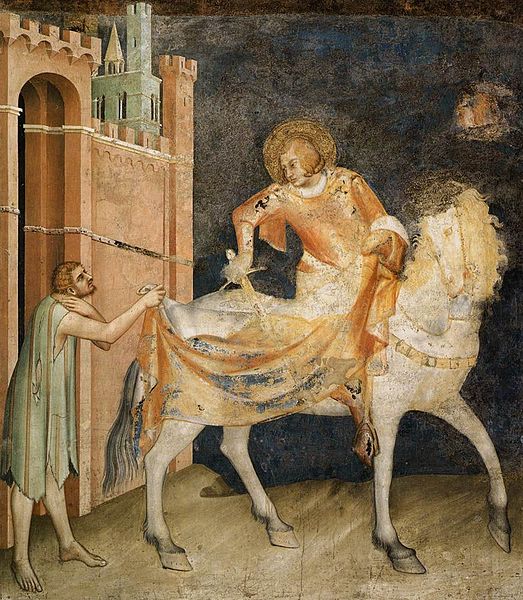
St. Martin of Tours was one of the central saints of the medieval monastic tradition. He had been a soldier, monk, and then bishop of Tours in his lifetime. This essay argues that because Martin was portrayed as the exemplary miles Christi or warrior for Christ in his monastic biography, he was an ideal for... Continue Reading →
Commentary on “The Conversion and Journey of St. Hortensius of Toulouse”
My saint takes inspiration from many of the saints I’ve studied. I decided to choose St. Martin’s time and place for my saint because I found Martin’s life, his time period and his conversion of the pagans interesting. I wanted to create a saint with some similar experiences and qualities while having other ones. Like... Continue Reading →
The Conversion and Journey of St. Hortensius of Toulouse
St. Hortensius was born in Toulouse, southern Gaul, in 334 AD to a wealthy and prominent pagan family. Hortensius always had the light of intelligence, and read the poetry of Virgil, Ovid, and Cicero. Hortensius was full of energy and liked to wrestle. But he was also boisterous and arrogant: as soon as he reached... Continue Reading →
The Ideals and Roles of Late Antique Monasticism
Late antique monks and nuns believed their true utopia would come later in heaven, while on Earth they had to strive for perfection through virtue. One of the things this involved was being free of material possessions that could distract them so they could imitate Christ. Monks were often wealthy people who sold their possessions... Continue Reading →