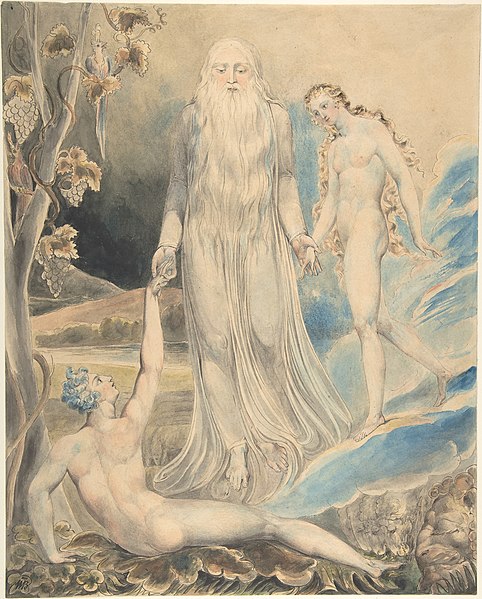
In Book 9 of Paradise Lost, Adam and Eve argue on whether to split up their work. Adam fears that Eve will be easily tempted if she leaves him. Eve argues that Adam needs to trust her and that untested faith and love is weak, echoing God’s and Milton’s beliefs on the importance of free will and fitting with the poem’s logic. Despite Eve’s later fall, this is all part of God’s plan.
Adam says he is afraid that Satan will tempt Eve away from God. Eve replies that she is offended by Adam not believing in her: “that thou should my firmness therefore doubt / To God or thee, because we have a foe / May tempt it, I expected not to hear” (Milton Book IX 279-81). Eve says that Satan’s “fraud is then thy fear, which plain infers / Thy equal fear that my firm faith and love / Can by his fraud be shaken or seduced” (Milton Book IX 285-87). Eve says that if Adam already thinks that Eve’s faith and love can be taken away by Satan, then Satan has already won, and this is one of her arguments to go out by herself: that she wants to test her faith to God. She wants Adam to trust her. This trust is a major theme of the poem: God trusts Adam and Eve in Paradise and is not policing them. Adam replies that being tempted slanders “the tempted with dishonour foul, supposed / Not incorruptible of faith, not proof / Against temptation” (Milton Book IX 297-99). Eve asks Adam “What is faith, love, virtue unassayed / Alone, without exterior help sustained?” (Milton Book IX 335-36) Eve is saying that if they never have their faith, virtue or love challenged, then these things do not truly exist: only blind obedience does. They need to be tested to make sure that they have these things. Eve is echoing God here. That is the whole reason why God allowed Satan to leave hell. God wants humanity to love Him willingly: otherwise, they would just be His mindless servants. Eve feels that her and Adam’s happiness in Eden has to be earned through their virtues. Before working for Cromwell, John Milton had written Areopagitica on the importance of the free press. Milton believed that if one is afraid to hear opposing ideas, they do not have faith, but rather fear. Milton does not praise virtue that is untested. God shares Eve’s desire to test her virtue.
Adam concedes Eve’s point, saying that “God left free the will, for what obeys / Reason, is free, and reason he made right” (Milton Book IX 351-52). Adam says that they were made with free will, but also that they must use their reason to guide that will to the truth. This is in line with Milton’s belief that individuals should not always rely on others to find the truth but need to come to it by themselves, a major Enlightenment belief. Adam still gives Eve a warning, telling her to be careful “lest, by some fair-appearing good surprised / She dictate false, and misinform the will / To do what God expressly hath forbid” (Milton Book IX 354-56). Adam recognizes that reason can sometimes mislead one into mistaking Good for Evil and wants Eve to be ready when Satan does tempt her. Adam then dismisses Eve and tells her to
Go; for thy stay, not free, absents thee more;
Go in thy native innocence, rely
On what thou hast if virtue, summon all,
For God towards thee hath done his part, do thine. (Milton Book IX 372-75).
Adam trusts Eve and recognizes that God has armed her with all the tools she needs to resist Satan. While later Adam will sort of be proven right when both he and Eve are tempted by the snake and their time in Paradise is ruined, they still had to be free to fail, which was God’s plan all along for them.
Eve has the stronger argument against Adam because it is in line with the Miltonian belief in free will and reason. It is God’s will that Adam trust Eve to go alone because He had allowed Satan out of hell in the first place to test Adam and Eve’s devotion. They are free to fail, and indeed they eat the Apple and are expelled from Paradise, but God has mercy on them because they were deceived. God will later send the Son Jesus to redeem humanity.
 diegodelaparra
Leave a comment