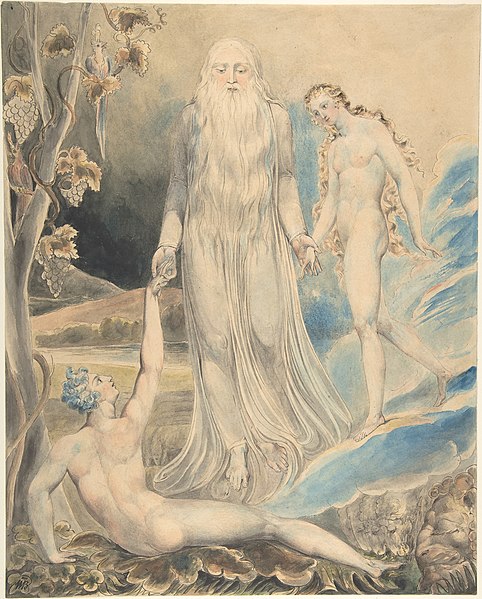
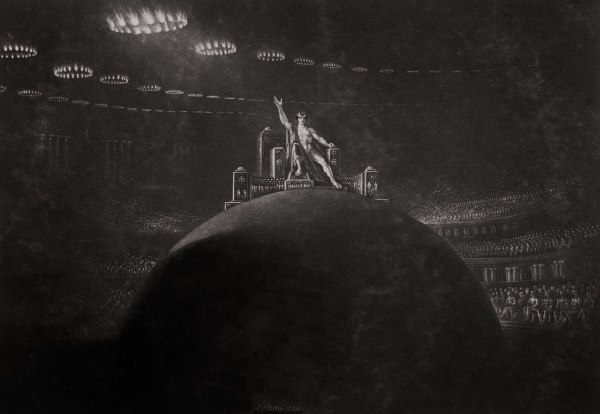
In John Milton’s Paradise Lost, the semblance of hell, Satan and his fellow demons is often radically different from their substance. One strong example of this is in hell’s freedom. Satan claims that hell is a democratic form of government, but this is proven not to be the case through Satan’s tyrannical rule and his... Continue Reading →
Comparing and Contrasting Melancholy in Cavendish and Milton
In both John Milton’s Il Penseroso and Margaret Cavendish’s A Dialogue between Melancholy and Mirth, Melancholy is a mature intellectual pursuit imparting knowledge and virtue since the poets draw on its complex and multifaceted nature. But while Cavendish’s description of melancholic thoughts and actions is very generalized, Milton’s is more specific. This may be because... Continue Reading →
A Glimpse into the Development and Growth of Quebec’s Railway Industry in Historic Newspapers
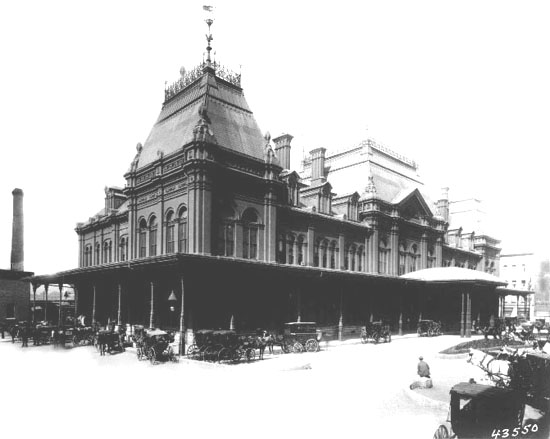
A large country such as Canada requires a strong railway industry for its transportation and economy. Four historical articles from Quebec’s English speaking media can tell us about the growth and development of the railway industry in Quebec and in relation to the rest of Canada, with citizens and the government being integral to this... Continue Reading →
Two Versions of King Arthur Contrasted
The story of King Arthur has been told in many different forms over the centuries. Two of the core seminal works are Sir Gawain and the Green Knight, a long poem from the 14th century by an unknown author, and Le Morte d’Arthur, a prose work from the 15th century by Thomas Malory. King Arthur... Continue Reading →
The Spots of the Dreamer in “Pearl”
In Part 16 of the Pearl poem, the Dreamer asks the Pearl-Maiden to show him the way to Jerusalem, but the Pearl-Maiden tells him the difference between the worldly and heavenly Jerusalems. This section is about the spots of man which keep him trapped in the worldly Jerusalem away from the heavenly one, and the... Continue Reading →
A Glimpse into the Life Cycle of Medieval Novgorod
https://www.youtube.com/watch?v=OMIzcrVXY9c&t=938s Video Script Hello, my name is Diego De la Parra and this video is on “A Glimpse into the Life Cycle of Medieval Novgorod Through the Eyes of Birchbark”. In the 1950s archeologists discovered hundreds of birchbarks documents near Novgorod, Russia. They were letters, notes and receipts dating from the 11th to 15th centuries,... Continue Reading →
The Reconceptualization of Marriage as an Independent Institution in Early Modern Europe
Medieval marriages were multifaceted. In canon law marriage focused more on consent and autonomy than rules. Laws of marriage were not always followed, and different types of marriage could be experimented with. Weddings were often just as much social and opulent events as they were about the couple. Mock youth groups could prepare themselves for... Continue Reading →
Reflection on the “Diet, Food and Consumption in the Greek and Roman Worlds” UTM talk (Delivered Sept 22, 2022)
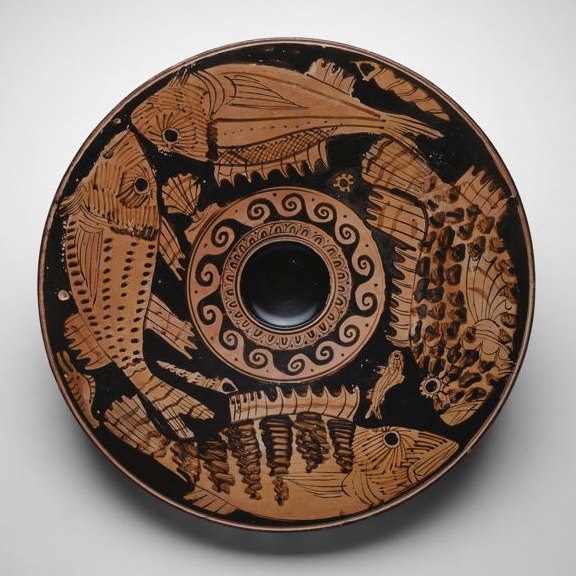
The first lecture by John Wilkins was on food in Greco-Roman Culture. Wilkins started out by talking about anthropological situations of food and culture in antiquity. The ancient Greco-Romans believed that nature was controlled by powerful forces, normally gods. I think this is a good point: many ancient cultures including the Greeks knew the world... Continue Reading →
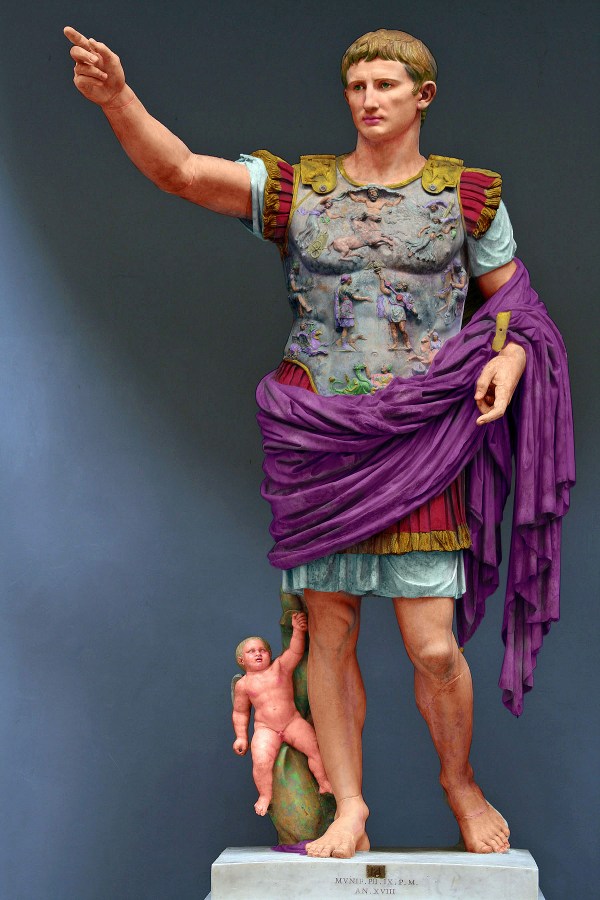
Augustus’ relationship with Aphrodisias and Samos
The document is a copy of a letter that Augustus had given in reply to Samos, inscribed in a marble block from the grand archive wall of the theatre in Aphrodisias, Caria. The date of the letter is not exactly clear: but it was most likely from soon after 27 BC.[1] The Aphrodisian copy may... Continue Reading →
Analysis of The Tomb of Fastia Velsi from Chiusi
Fastia Velsi’s urn was part of a tomb in the Colle Lucioli near Chiusi. The lid of Fastia Velsi’s inscribed travertine urn depicts her wearing a tunic and elaborate jewelry, reclining on two pillows as if in a banquet. The front of the container depicts a youthful figure with wings and fishtail legs. It possibly... Continue Reading →