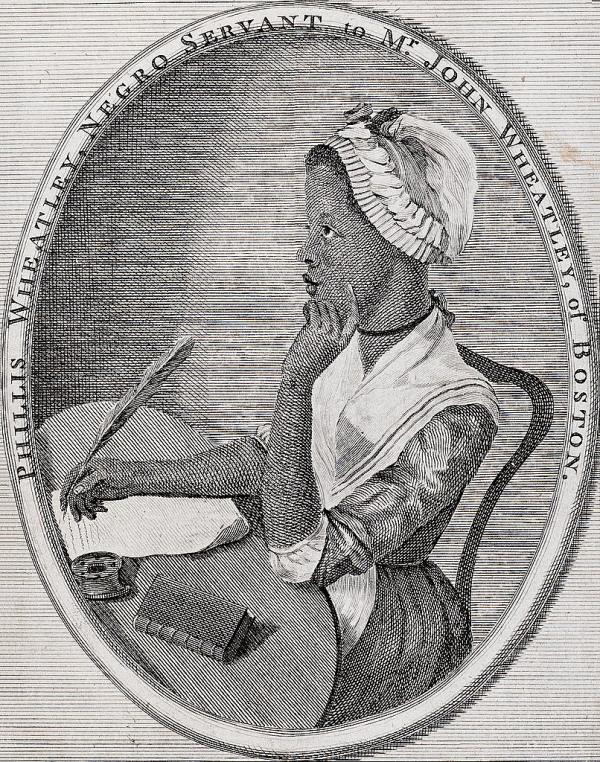
Phillis Wheatley was an American poet and a child prodigy who wrote many well-regarded poems and was considered one of the best of her time, even being revered by George Washington. This was despite her status as a slave. Her poems which will be discussed in this essay are “On Being Brought from Africa to... Continue Reading →
“The Passing of Grandison” as an Ironic Story
“The Passing of Grandison” is a short story written by Charles Waddell Chesnutt and features in the collection The Wife of His Youth, and Other Stories of the Color Line published in 1899. Taking place in the 1850s, it has Richard “Dick” Owens, the son of the slave owner Colonel Owens, attempt to free one... Continue Reading →
The “Innocent”, “Naked” Blacks in “Benito Cereno”
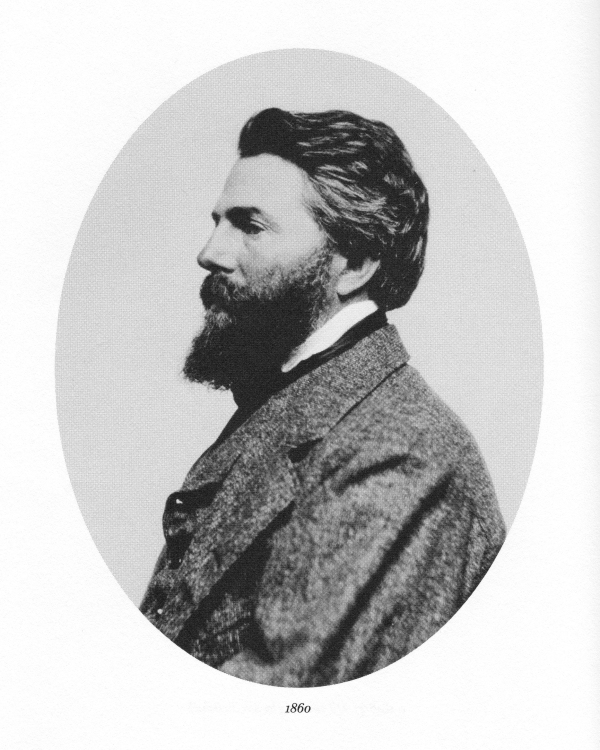
In Herman Melville’s Benito Cereno, there is a scene where Captain Delano encounters a group of black women and children on the deck of the Saint Dominick. While looking at them, Delano assumes that the women are uncivilized but at the same time are well-mannered, innocent and loving towards their children. This scene, unlike what... Continue Reading →
Phillis Wheatley’s Sermon to Cambrige Students
Phillis Wheatley was an American poet who was the first African American to get published. Her poem “To the University of Cambridge in New England” is addressed to students of that university, and she tells them of Jesus’ sacrifice and the promise for redemption. This poem affirms equality through the shared sin and salvation of... Continue Reading →
The Egyptian Response to the Napoleonic French Occupation
Napoleon, leading a French army, invaded and occupied Egypt in 1798. His justifications for the endeavour were to have a position to harass the British in India, to protect the interests of French trade and to bring science and liberal, Enlightenment values to Egypt. The French saw some early successes, yet just 3 years later,... Continue Reading →
“The History of the Kings of Britain” and “Utopia” as Fictional Unifying Narratives
Geoffrey of Monmouth’s The History of the Kings of Britain is a pseudohistorical narrative of the Kings of Britain published in 1136. It begins with the foundation of the British nation by Trojan exiles and continues for about 2000 years until the Anglo-Saxon invasion and the rise of King Arthur. Thomas More’s Utopia is a... Continue Reading →
The Marvelous Christian Discoveries of St. John Mandeville
The word “marvel/marvelous” conjures up diverse meanings: in the 1300s, it would have meant a marvelous event outside of human power and nature and thus believed to be supernatural/divine. But it can also mean something wonderful or astonishing that causes someone to feel surprise, admiration or wonder (Oxford University Press). Something which is marvelous is all... Continue Reading →
Exploring the “Legend of the Magibird”
I wanted to write a story about someone hunting for a phoenix. I expanded it to include a persistent, brave teen who looks for adventure and wants to gain his father’s respect while having no clue how to achieve it, with the phoenix hunt and the context/background. It was inspired by a Russian folk song... Continue Reading →
Canada from 1945 to 1995
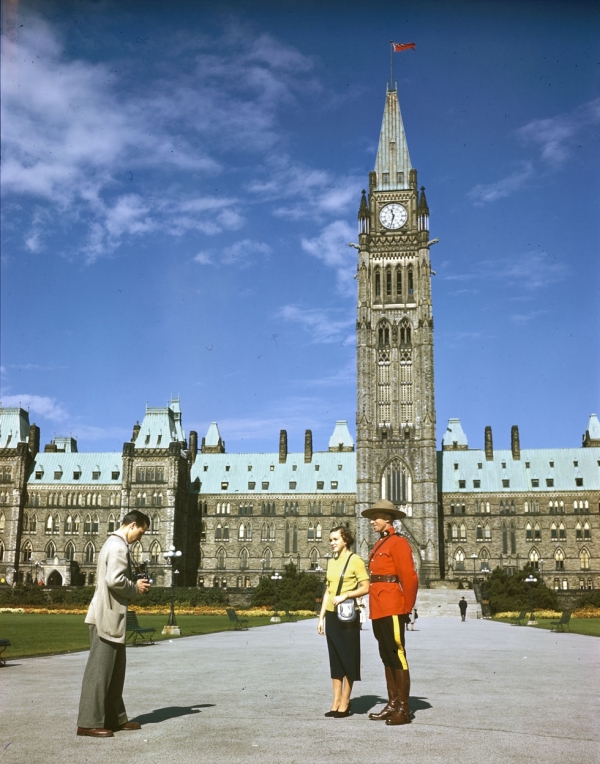
At the end of the war, Canada had plentiful wealth and was in a powerful position. Anxieties of a postwar decline and large-scale unemployment were shown to be unwarranted, as the industrial war apparatus, designed by C.D. Howe, the federal Munitions and Supply Minister, was smoothly shifted to regular, peacetime use. Not only did the... Continue Reading →
Canada in the early 20th century
Canada entered the 20th century with indefinite wealth and advancement. Prime Minister Wilfrid Laurier's government continued building the railway and by 1914 it reached both coasts. While diplomatic relationships began to form with the rest of the world Britain directed most of Canada's international relationships, and Canadians started to get sick of being beholden to... Continue Reading →