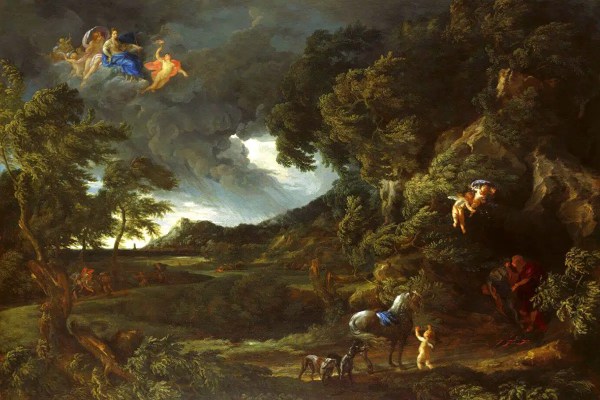
In the Iliad, Hector is a Trojan prince who leads his people in their war against the Greeks. Book 6 describes his character and reason for fighting. Hector is the Trojans’ pillar, a humble man who accepts his fate but fights so he can earn fame while securing the Trojans’ future. All the Trojans look... Continue Reading →
Secondary Source Review: Seasons and Similes in the Aeneid
This source is an article about how seasons are used as similes in the Aeneid, by George Fredric Franko of Hollins University. The audience for the article is people who have already read the Aeneid, because the author does not analyze the similes in the order they appear in the story. He looks at autumn... Continue Reading →
Criseyde’s Tragic Journey to Love and Back
One of the English poet Geoffrey Chaucer’s most famous poems is Troilus and Criseyde, a retelling of the classic love tragedy poem. It is set amid the background of the Trojan War, but in a 14th century environment. In it, the Trojan prince Troilus falls in love with the Trojan noblewoman Criseyde. Criseyde is a... Continue Reading →
Plato’s Explanation Of Why Art Is Useless in His State
Plato’s Republic is a Socratic dialogue on justice, how the perfect city-state should be ordered, and how the virtuous man should behave. In “Book X”, Glaucon and Socrates explore the nature of poetry. They argue that Poetry must be excluded from a well-ordered state, as it is an imitative art form, thrice removed from the... Continue Reading →