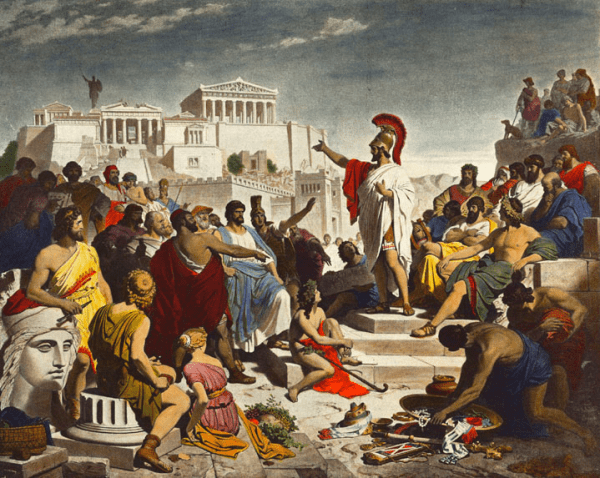
In 430 BC, during the funeral of Athenian soldiers after the first battles of the Peloponnesian War, Athens’ leader Pericles made a speech on the glory of Athens and its democracy. Pericles argued the Athenians were a brilliant people who valued liberty, leisure, knowledge, and generosity. Pericles lauded Athens’ democratic system as fair and an... Continue Reading →
The Unlikely Greek Defeat of the Persians
The Greco-Persian Wars were a turning point in Western history because the Greek city-states defeated the Persian Empire and stopped them from conquering Greece, saving Western civilization. The Persian Empire in the dusk of the 6th century was the undisputed superpower of the world, extending from Asia Minor to Afghanistan and as far south as... Continue Reading →
Aristotle as a Basis for Libertarianism
Libertarians, or “Aristotelian liberals”, have used Aristotle’s ideas to argue for liberty, despite the fact that he was not a libertarian. They have cited Aristotle’s observation of humanity’s unique capacity to exercise reason. Free, rational people obtain happiness through practicing virtue with others in a state that fosters their well-being, a basis for the libertarian... Continue Reading →
Aristotle: The First Realist
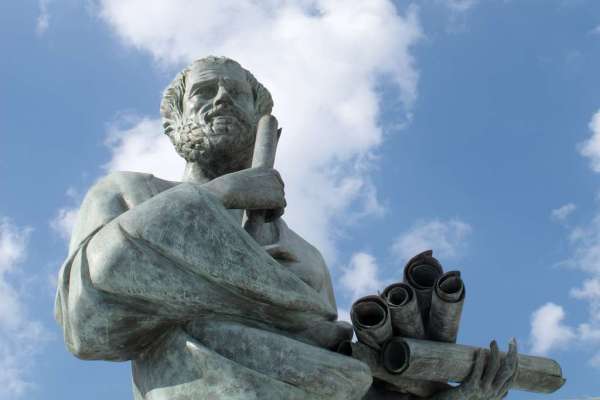
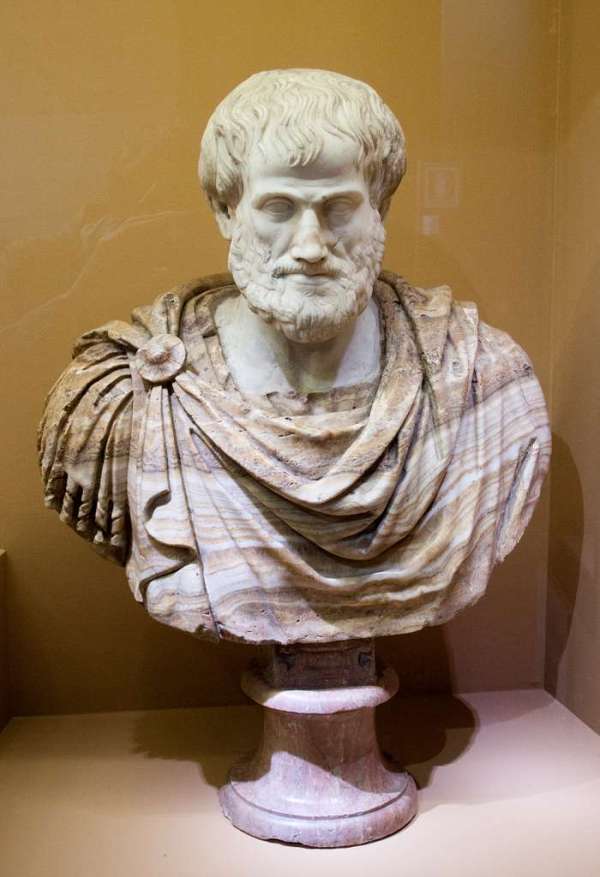
Aristotle (c. 384-322 BC) was an ancient Greek philosopher, perhaps the greatest in history. He invented the idea of separate academic disciplines, dipping his toes into philosophy, politics, ethics, biology, natural sciences, aesthetics, poetry, and metaphysics. In contrast to his master Plato, who focused on the ideal otherworld, Aristotle focused on the real, particular world.... Continue Reading →
The Wise, Austere, and Just Philosopher King
In Plato’s Republic, Socrates discusses the philosopher king, ruler of his ideal city state of Kallipolis. He is the best suited to protect the state’s laws and institutions, hence his other name of the guardian. The philosopher king is wise, austere, and just. He learns the true Forms and how to implement them in his... Continue Reading →
The Pre-Socratic Quest for the Essence of the Universe
The pre-Socratics were the first philosophers in the West and possibly the world, living in the 500s - early 400s BC. They asked questions about the world and tried to answer them by applying human reason, knowledge, and science rather than mere myth. While some of their answers were wrong, the nature of their discourse... Continue Reading →
The Greek Search For The Universe’s Secrets
The classical Greeks are considered the founders of Western civilization, but what made them significant and set them apart from others? They were the first to think about thinking. They tried to understand the structure of the universe, and to master it using reason. They also posited absolute moral values for all people to follow.... Continue Reading →
Overview of Mycenaean Greece
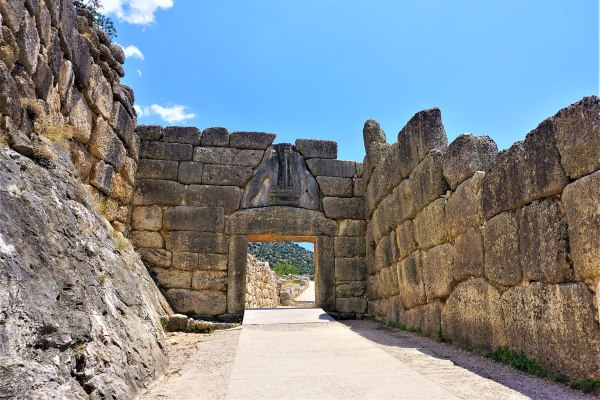
Mycenaean Greece was the late Bronze Age period of Greek history from around 1750 to 1050 BC, when the first advanced civilization emerged in mainland Greece. It is named after the city of Mycenae. The Mycenaean Greeks made significant advances in engineering, architecture, and military infrastructure. They created the first Greek script, Linear B, and... Continue Reading →
Aeneas’ Pietas against Dido’s anti-Pietas
The Aeneid is an epic poem by Virgil that tells an origin story of the Romans and was Rome’s national epic. One of the most famous episodes of the work is Aeneas’ tragic affair with Dido, which ends with Dido’s suicide. This essay will argue that Aeneas’ staunch inclination to following his pietas most strongly... Continue Reading →
The Role of the Jews in the Glorious Revolution
The Glorious Revolution was one of the most significant events in English history. It was the last successful invasion of England and saw the replacement of the Stuart monarch James II with his daughter Mary and her husband William of Orange, who became King William III. This paper will argue that Jews played a crucial... Continue Reading →