In both John Milton’s Il Penseroso and Margaret Cavendish’s A Dialogue between Melancholy and Mirth, Melancholy is a mature intellectual pursuit imparting knowledge and virtue since the poets draw on its complex and multifaceted nature. But while Cavendish’s description of melancholic thoughts and actions is very generalized, Milton’s is more specific. This may be because... Continue Reading →
A Glimpse into the Life Cycle of Medieval Novgorod
https://www.youtube.com/watch?v=OMIzcrVXY9c&t=938s Video Script Hello, my name is Diego De la Parra and this video is on “A Glimpse into the Life Cycle of Medieval Novgorod Through the Eyes of Birchbark”. In the 1950s archeologists discovered hundreds of birchbarks documents near Novgorod, Russia. They were letters, notes and receipts dating from the 11th to 15th centuries,... Continue Reading →
Criseyde’s Tragic Journey to Love and Back
One of the English poet Geoffrey Chaucer’s most famous poems is Troilus and Criseyde, a retelling of the classic love tragedy poem. It is set amid the background of the Trojan War, but in a 14th century environment. In it, the Trojan prince Troilus falls in love with the Trojan noblewoman Criseyde. Criseyde is a... Continue Reading →
The Reader’s Replacement of the Author
The French structuralist writer Roland Barthes wrote a short essay called “The Death of the Author” in 1967. In it, he argues that writing is the destruction of every voice, and that while this has not been recognized before, writers are now starting to take this into account and critics should focus on the reader... Continue Reading →
The “Innocent”, “Naked” Blacks in “Benito Cereno”
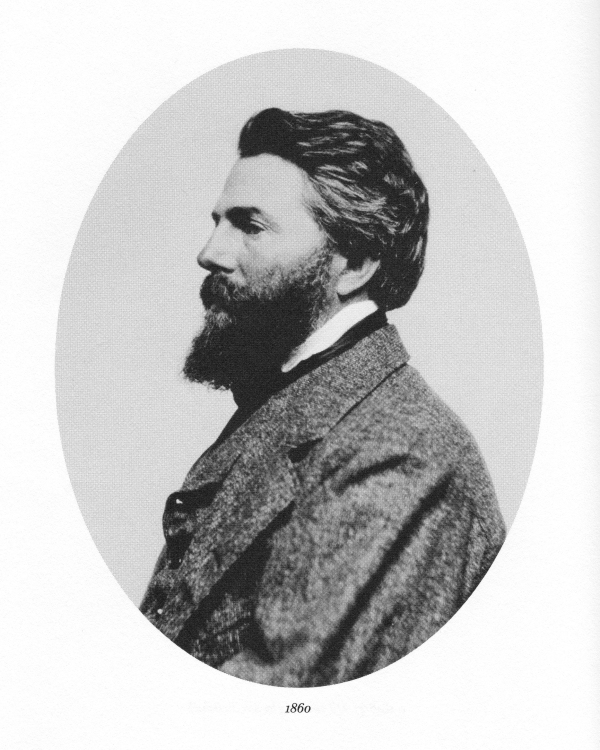
In Herman Melville’s Benito Cereno, there is a scene where Captain Delano encounters a group of black women and children on the deck of the Saint Dominick. While looking at them, Delano assumes that the women are uncivilized but at the same time are well-mannered, innocent and loving towards their children. This scene, unlike what... Continue Reading →