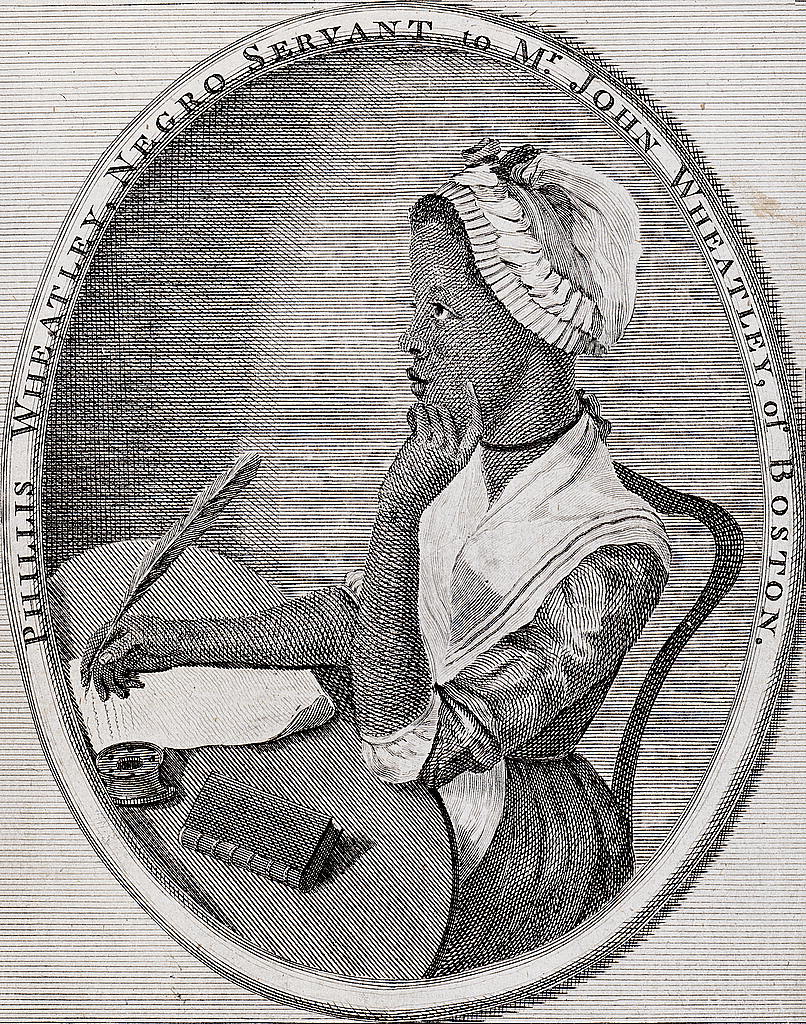
Phillis Wheatley was an American poet who was the first African American to get published. Her poem “To the University of Cambridge in New England” is addressed to students of that university, and she tells them of Jesus’ sacrifice and the promise for redemption. This poem affirms equality through the shared sin and salvation of all, and then gives the students a call for action and self-improvement. The author drives her point forward through heavy use of Biblical references and language, along with her account as an enslaved African woman.
The poem’s first theme is equality, with Wheatley using Biblical language to affirm it. In the first stanza, she refers to her native Africa as “the land of errors, and Egyptian gloom,” referring to the three nights of darkness that Egypt suffered during it’s ten plagues in Exodus (Wheatley 4). She could both be paralleling her own spiritual darkness as a pagan woman in Africa, and also the majority non-Christian area of West Africa which she came from. This image of darkness in this stanza can be contrasted with the second stanza, which has images of the sky and heaven, with Wheatley telling the students that “to you ‘tis given to scan the heights / Above, to traverse the ethereal space” (Wheatley 7-8). They come from very different starting places: the students were likely born well-off and have the privilege to study at such a prestigious university while Wheatley was born into slavery and darkness. But despite this, Wheatley tells them that “when the whole human race by sin had fallen, / He deigned to die that they might rise again” (Wheatley 17-18). She is affirming that every human, without distinction of race or social class, is tainted with sin: there are no exceptions. But Jesus, although he didn’t have to, sacrificed himself so that they could share with him in Heaven. She herself, in the first stanza, expresses her gratitude towards God for his grace in helping convert her to the Christian faith. While the Wheatley family is not referenced in the poem, she is also likely grateful that they have treated her well and helped her grow in the poet that she is, despite her being enslaved by them. It is significant that she chooses the end of the second stanza to make her point about salvation. She has already gotten the audience to listen to her, first introducing herself before explaining to them their own religion, now she is forcing them to confront the hypocrisy of slavery. She has affirmed her own sin and her own redemption in God’s hands, now she is calling on all of the students to do the same.
The second theme of the poem is the call to action. Wheatley tells the students to “improve their privileges while they stay” (Wheatley 21). They have a limited time in this world, and they must use it to take advantage of what they have and do good with it. They must “redeem” each hour in order to make sure that good news about them is sent to heaven, because God is always watching them to make sure that they are doing the right thing. Wheatley has given the students a lesson and now she is telling them to do something with it. Also, both the second and third stanza have lines relating to news and reports: but while the former is about God’s news of his salvation from heaven to earth, the latter concerns reports coming up to heaven on whether the gift is accepted and earned or not. Wheatley tells them that they must guard themselves against sin and “suppress the deadly serpent in its egg”, again employing a Biblical reference here: to the Serpent of Satan at Eden (Wheatley 26). They must suppress even sinful thoughts before they can surface into temptations causing sinful beliefs and later actions. This also connects to serpents because they like to strike stealthily, so they can kill you if you are not on guard. It is also significant that she calls the students “blooming plants of the human race divine”, because as plants help give life to the world, the students will enrich the world with their knowledge (Wheatley 27). However, serpents can ruin and destroy plants, just as the temptation to do evil with intelligence can hurt the world. She strengthens her point by calling herself an “Ethiop”: if even she, who is enslaved and a convert to from paganism, shuns sin and can change the world with her talents, then they can surely do so (Wheatley 28). The poem ends with a warning: if they do not reject sin, they may feel temporary sweetness, but it will lead to the sinking of their soul and punishment. She ends the poem like this, rather than in a good tone, because sometimes warnings and fear can have a better effect in getting a message to sink in.
This poem is a sermon giving a general overview of the Christian core message and meanwhile succinctly affirming equality, and later calling the students to do good and improve their privileges. It can be seen as a basic and summarized introduction to Christianity, and also as a self-improvement poem, making it relevant to all people today, not just for Cambridge students in the 18th century. Among the lessons it teaches is gratitude, telling us to be thankful for what we have and not to be resentful against those who have more and hate us, and also tells us to be alert at all times. Its message is helpful and informative for both Christians and non-Christians.
 diegodelaparra
Leave a comment