St. Hortensius was born in Toulouse, southern Gaul, in 334 AD to a wealthy and prominent pagan family. Hortensius always had the light of intelligence, and read the poetry of Virgil, Ovid, and Cicero. Hortensius was full of energy and liked to wrestle. But he was also boisterous and arrogant: as soon as he reached the age he loved to party constantly and drink indulgently. In one of these events, he nearly beat a man to death in a fight, but his high status spared him punishment. Hortensius had a son named Marcus with his love Julia. But his gaze was later drawn to Petunia, and he secretly had a daughter with her, Aurelia.
Hortensius joined the Roman army against his parent’s will and was sent to the frontier at the Rhine to face the barbarian invaders. Hortensius furiously charged at the barbarians, but they swarmed him, slashed his leg and knocked him out. Only by the grace of the Lord did Hortensius survive: our Saviour held out his hand and implored him to convert.
Hortensius woke up, nursed by an old man in a grove. Hortensius’ wound was healed by the placing of an herb on it, but he was too crippled to return to the army and needed a staff. Hortensius took much of his money and sailed secretly to Alexandria in Egypt, taking many movable belongings. He sold his belongings for gold, some of which he gave to the poor. Hortensius then headed to the monastic community at Mount Colzim. He spoke to the abbot Manuel, who gave him a Bible. Hortensius joined the community and gave up his fancy navy blue toga lined with red to the altar of the monastery’s church.
Hortensius locked himself in his cell and engaged in constant prayer, while attempting to grasp the Scripture. The devil appeared as a beautiful woman and tried to make him desire his old life of hedonism. Hortensius reached out his hand to the female figure, but it morphed into an ugly black shade and knocked him out cold.
Hortensius woke up, left his cell, and found a hermit. He confessed his thoughts and his unholy past, and begged for help. The hermit, repulsed by Hortensius, told him he had no hope for salvation. Hortensius tried to leave the monastery in despair but was stopped by Manuel. Hortensius admitted everything. Manuel told him not to despair, since everyone faces temptations, but instead to return to his cell and ask God for help, which Hortensius promptly did. The hermit was plagued with thoughts of lust and seizures of delirium. He then apologized to Hortensius and was healed.
The next time Hortensius encountered the devil, he once again appeared as a beautiful woman, wearing purple robes and the most splendorous jewels. Hortensius made the sign of the cross, driving away the devil. Hortensius memorized Scripture and wrote a copy for himself. He also studied Origen, Stephen, and Pachomius. He sang the psalms by himself and with the monks. He drank only water and abstained from anything sweet, and from meat except on Wednesdays and Fridays.
After 5 years, Hortensius had to see the City of God for himself. He visited the Church of the Holy Sepulchre where he had a vision of Jesus’ Crucifixion. Hortensius was overcome with tears and fell to his knees shaking. But he then saw the resurrection, and was filled with illumination, his faith strengthened. He stayed in a cell in Jerusalem, doing similar activities as he had done in Egypt.
He never forgot his old life, and after 11 years abroad returned home to Toulouse. He convinced his mother and brother to convert through his sound arguments, but his father would not be moved and kicked them all out. He would eventually convert on his deathbed.
Hortensius also turned to Julia but having found out about his adultery, she told him that she wished he was dead, and then ignored him. Petunia had died of an illness, and Julia was raising Aurelia. However, Marcus and Aurelia were struck by a violent fever. Julia prayed to Apollo, but her prayers went nowhere. Hortensius prayed to Jesus, while tearing his grey cloak into pieces and putting them on his children. He also fasted for nearly a week, and wrapped chains around his body, cutting his flesh. Finally, God healed his children, and Martin gave Him thanks by wearing a hairshirt covered with plain white robes.
Hortensius then heard of the bishop of Tours, Martin. He headed north and crossed Gaul. He witnessed Martin’s miracle when the pagans cut the pine tree and it fell in a different place instead of on Martin. Hortensius met Martin, impressed him with his knowledge of the faith and received a blessing.
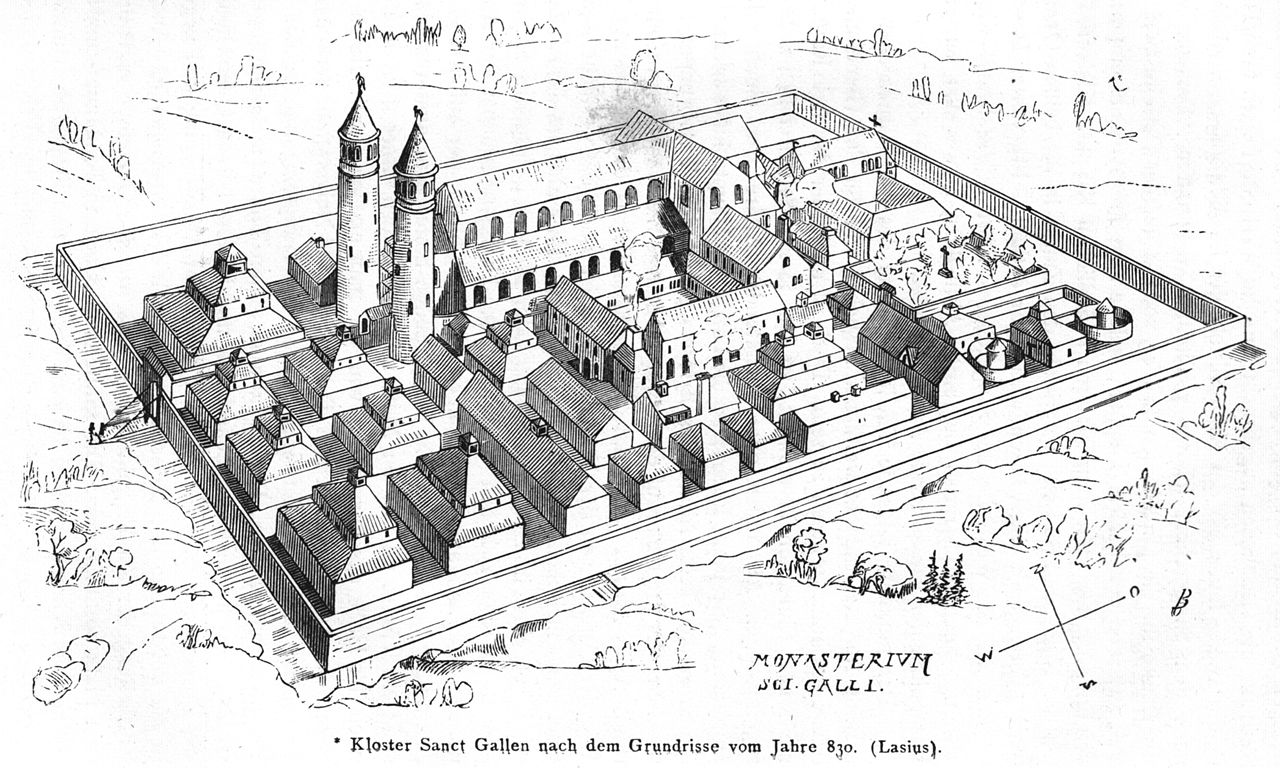
Hortensius sold off most of his possessions, and he and the newly converted Julia turned his estate into a monastery. Hortensius took some sixty faithful, and Julia in turn took sixty women and girls for her monastery, including Aurelia. Hortensius instituted a strict intellectual regime involving constant reading of the Scriptures and the philosophers, along with singing all the psalms every week. Hortensius had his disciples create copies of the Scriptures to diffuse across the Western Roman Empire, starting one of the first scriptorias. He insisted on this same regime for the women’s monastery. Hortensius’ monastery produced it’s own crops, and a community sprang up around it. Hortensius’ instituted strong fasting: permitting only water to be drunk, with wine and meat consumed only on Wednesdays and Fridays. His monastery became famed across Gaul for its knowledge and learning.
Hortensius also performed his own miracles and converted other pagans. He disrupted a pagan celebration, and the angry pagans jostled him, threatening his death. But Hortensius gave them a challenge: two altars would be built and set on fire. Rain quenched the pagan altar’s fire, but Hortensius’ altar resisted and continued to burn for one day. The amazed pagans converted.
In another instance, Hortensius forced his way into a pagan temple, raised his staff, and struck the rod of a marble statue of Jupiter. The rod was split in two and the two pieces fell on the floor on top of each other, forming a cross. Martin was beaten down by angry pagan worshippers, but the cross had been miraculously fused together, shocking the pagan congregants, who agreed to be baptized by Hortensius and converted their temple into a church.
In another of Hortensius’ most famous miracles, a little girl in Lyon was dying of pneumonia, but Hortensius brought one of his manuscripts and prayed to God for her healing. He put a cup of water on the manuscript before pouring it on the little girl, healing her.
Hortensius’ wife maintained the women’s monastery until her death in 398. Overcome with sadness, Hortensius stayed in his chapel for 5 years, engaging in fasting and constant prayer to deal with his mourning. Hortensius continued to maintain the monastery until his death in 414 when he entrusted it to his son Marcus. And so this hagiography by Theo, a monk in Hortensius’ monastery, ends.
 diegodelaparra
Leave a comment