In mid-16th century Europe, two intellectual groups, the resistance theorists and counter-revolutionary theorists, reconceptualized the nature of political power. They asked similar questions about the nature of society, government and the right of resistance, but came to very different conclusions. In 1556 the English theorist John Ponet published his Short Treatise on Political Power. Twenty... Continue Reading →
How Martin Luther Reconceptualizes Authority in Two of His Tracts
In 1520, Martin Luther published two tracts central to the Protestant Reformation: To the Christian Nobility in August, and The Freedom of a Christian in November. The former text appealed to the German political authorities to take the initiative in the face of the Church which he saw as corrupt, while the latter has him... Continue Reading →
The Factors Explaining Lutheranism’s Success
One of the most important books on the Reformation is Brand Luther, written by historian Andrew Pettegree. It explores how Martin Luther became the pre-eminent and defining man of his age and how he was able to spread his version of the Christian religion, paying special attention to the role of printing. This paper will... Continue Reading →
Historical Time Traveler’s Guide: St. David’s and Southwest Wales, late 12th century
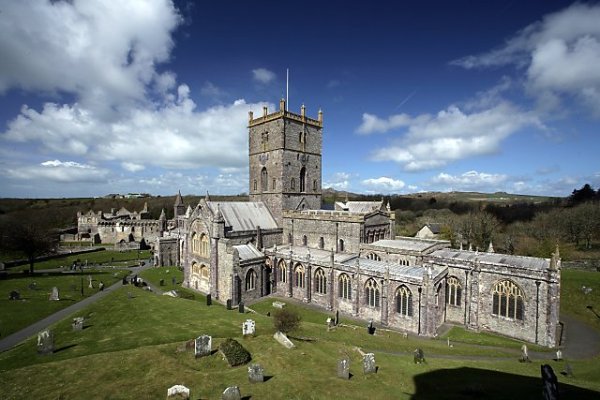
Location St David's is in the region of Deheubarth in the southwest of Wales. It is a remote corner on the coast of the Irish sea, with rocky and barren soil without woods, rivers, or meadows, never exposed to the winds and tempests.[1] The cathedral is in a narrow valley with damp, marshy and unstable... Continue Reading →
The Egyptian Response to the Napoleonic French Occupation
Napoleon, leading a French army, invaded and occupied Egypt in 1798. His justifications for the endeavour were to have a position to harass the British in India, to protect the interests of French trade and to bring science and liberal, Enlightenment values to Egypt. The French saw some early successes, yet just 3 years later,... Continue Reading →
Canada from 1945 to 1995
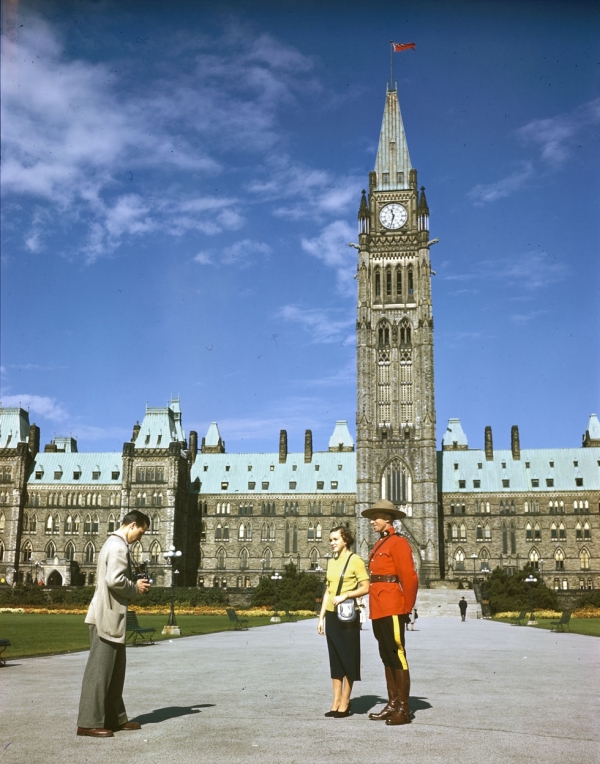
At the end of the war, Canada had plentiful wealth and was in a powerful position. Anxieties of a postwar decline and large-scale unemployment were shown to be unwarranted, as the industrial war apparatus, designed by C.D. Howe, the federal Munitions and Supply Minister, was smoothly shifted to regular, peacetime use. Not only did the... Continue Reading →
Canada in the early 20th century
Canada entered the 20th century with indefinite wealth and advancement. Prime Minister Wilfrid Laurier's government continued building the railway and by 1914 it reached both coasts. While diplomatic relationships began to form with the rest of the world Britain directed most of Canada's international relationships, and Canadians started to get sick of being beholden to... Continue Reading →
Canadian Confederation
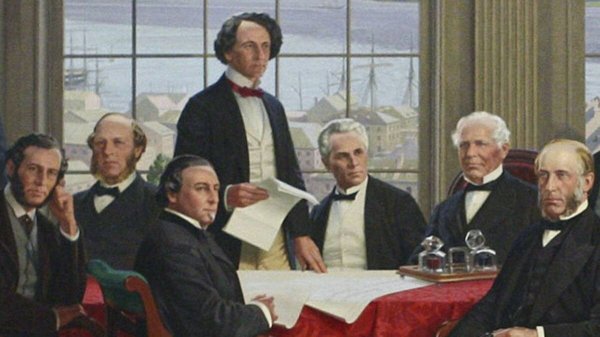
The wake of the War of 1812 instilled in Canadians new feelings of dynamism and self-determination. As the economy prospered, settlers in Upper Canada started to take a closer look at Britain's political and economic place in the colonies. Similar inquiries were being made in Lower Canada but for separate reasons: French Canadians bitterly criticized... Continue Reading →
British Canada
When the British took over Canada, few people cared in France. New France, which Voltaire had described as merely "a few acres of snow", had turned into a stinging liability for French administrators and they were more relieved than upset at its loss from the French empire. The period's political elite also thought that the... Continue Reading →
1600s Canada
The rulers of 17th century Europe had trouble colonizing Canada. A freezing, harsh, rugged and unexplored land, Canada was not too likeable for England, France and Spain. But those who did go to Canada found a flourishing system of trade and recognized that it could be an economic boon. The fur trade: The Indian tribes... Continue Reading →