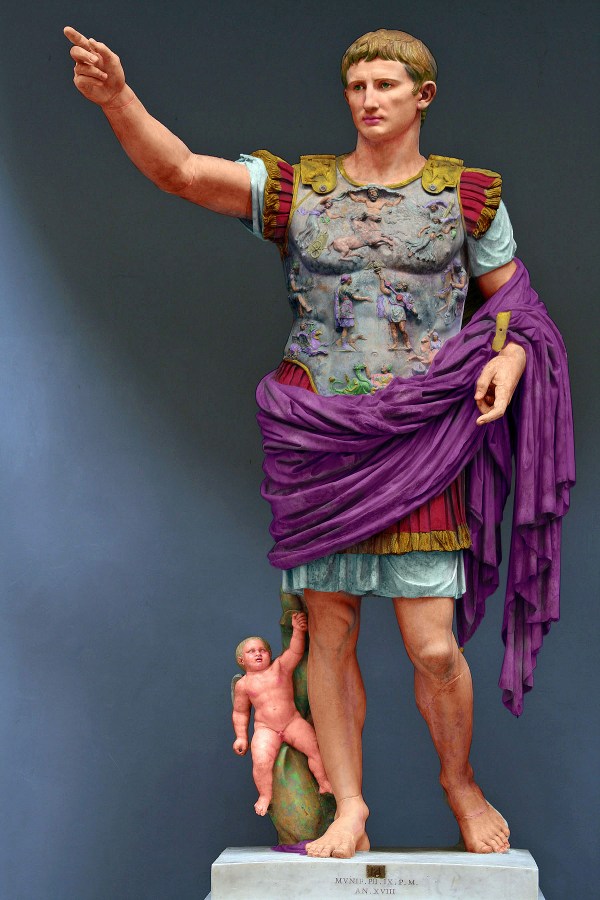
The document is a copy of a letter that Augustus had given in reply to Samos, inscribed in a marble block from the grand archive wall of the theatre in Aphrodisias, Caria. The date of the letter is not exactly clear: but it was most likely from soon after 27 BC.[1] The Aphrodisian copy may... Continue Reading →
Analysis of The Tomb of Fastia Velsi from Chiusi
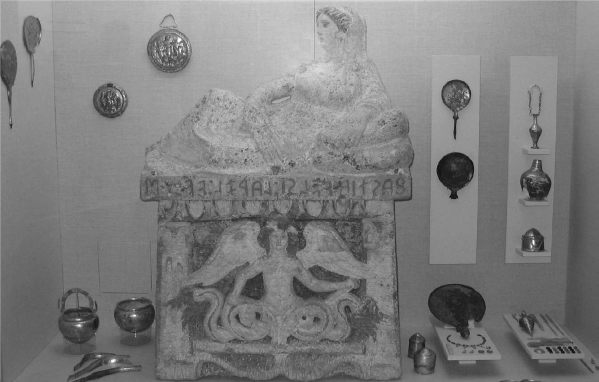
Fastia Velsi’s urn was part of a tomb in the Colle Lucioli near Chiusi. The lid of Fastia Velsi’s inscribed travertine urn depicts her wearing a tunic and elaborate jewelry, reclining on two pillows as if in a banquet. The front of the container depicts a youthful figure with wings and fishtail legs. It possibly... Continue Reading →
The Advancement and Reversal of Democratic Freedoms and Economic Equality in Latin America during the 20th century
In the first half of the 20th century, Latin America was going through a dynamic change. Social movements were taking control of their national destinies, advancing democracy along with economic equality in countries like Mexico, Brazil, and Argentina. But the United States, through its coup in Guatemala, initiated the Cold War which saw both the... Continue Reading →
The Moral Complexity of the Spanish Conquest of the Americas
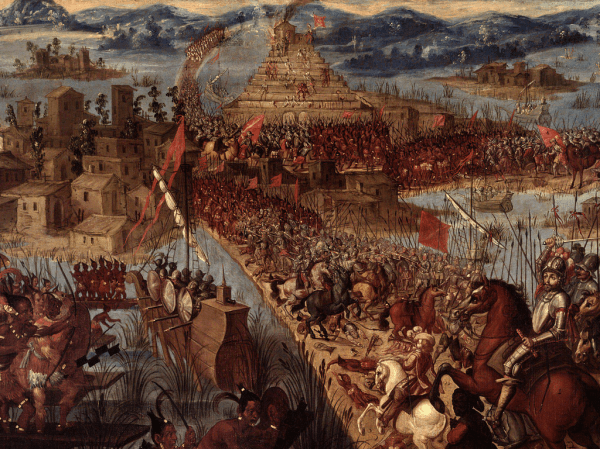
The Spanish conquest of America is a morally complex topic. Like any conquest, it involved brutality and violence. But this is not the whole story: to understand the conquest, one has to understand the logic of the conquerors’ world and their situation. The Spanish, having developed a Christian zeal in the long Reconquista, juxtaposed themselves... Continue Reading →
Polybius and the Background of the Second Punic War’s Outbreak
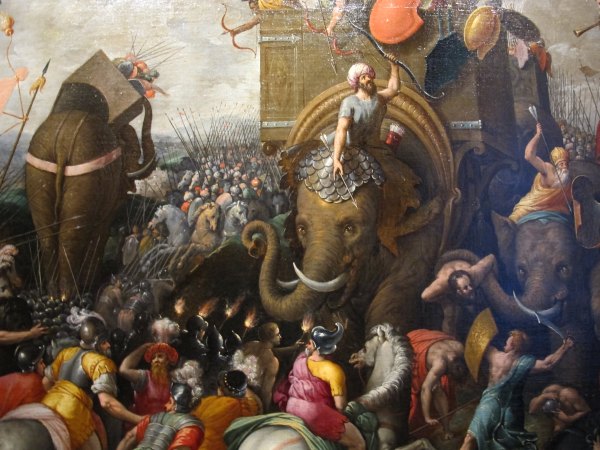
This source is a passage from Book 3, Chapter 30 of Polybius’ Histories on the causes of the Second Punic War. It argues that both sides are to blame for the war, giving reasons why. The Spanish city of Saguntum had placed itself under Roman protection since they had turned to the Romans to solve... Continue Reading →
The American post-WW1 debate between internationalism and nationalism
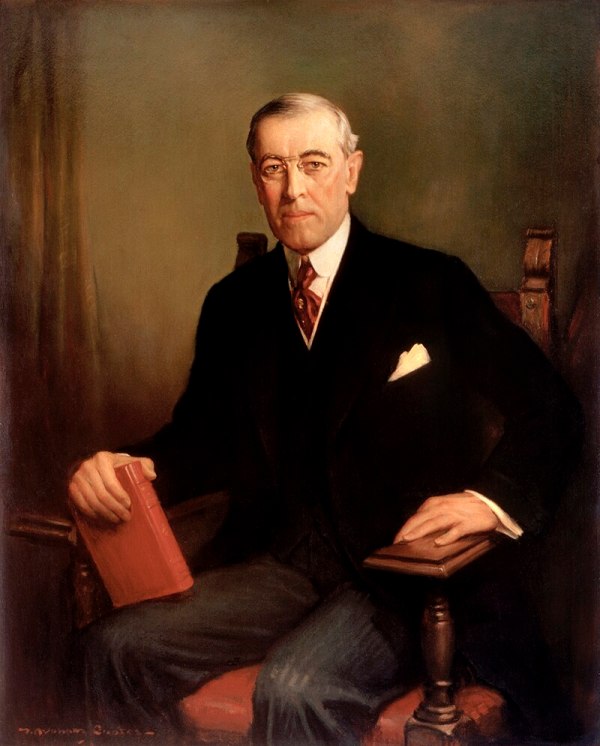
On January 8, 1918, during World War I which America had just entered nine months earlier, US President Woodrow Wilson outlined his vision of a post-war world in his “Fourteen Points” speech. He advocated for diplomacy, free trade, the creation of an association of nations, and the redrawing of national borders. But Wilson faced backlash... Continue Reading →
John Ponet and Jean Bodin on the nature of political power and sovereignty
In mid-16th century Europe, two intellectual groups, the resistance theorists and counter-revolutionary theorists, reconceptualized the nature of political power. They asked similar questions about the nature of society, government and the right of resistance, but came to very different conclusions. In 1556 the English theorist John Ponet published his Short Treatise on Political Power. Twenty... Continue Reading →
How Martin Luther Reconceptualizes Authority in Two of His Tracts
In 1520, Martin Luther published two tracts central to the Protestant Reformation: To the Christian Nobility in August, and The Freedom of a Christian in November. The former text appealed to the German political authorities to take the initiative in the face of the Church which he saw as corrupt, while the latter has him... Continue Reading →
The Factors Explaining Lutheranism’s Success
One of the most important books on the Reformation is Brand Luther, written by historian Andrew Pettegree. It explores how Martin Luther became the pre-eminent and defining man of his age and how he was able to spread his version of the Christian religion, paying special attention to the role of printing. This paper will... Continue Reading →
Historical Time Traveler’s Guide: St. David’s and Southwest Wales, late 12th century
Location St David's is in the region of Deheubarth in the southwest of Wales. It is a remote corner on the coast of the Irish sea, with rocky and barren soil lacking woods, rivers, or meadows, never exposed to the winds and tempests.[1] The cathedral is in a narrow valley with damp, marshy and unstable... Continue Reading →