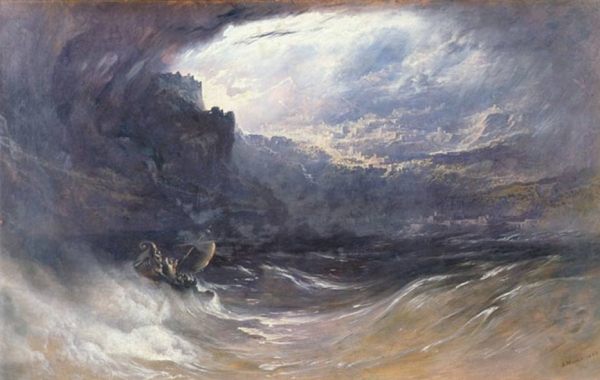
The ancient flood myth is common in many cultures due to the memorability of floods. When floods occur, the destruction and loss suggest a cosmic conspiracy of some sort and the hope for a new beginning. The flood destroys the old and gives birth to new life. Thus, the flood myth takes on the archetype... Continue Reading →
Cu Chulainn as a Traditional Hero
Cu Chulainn fulfills both the physical and moral requirements of a traditional hero and is the true equivalent to other heroes such as Hercules in the Greek pantheon. One of the qualities that makes Cu Chulainn a hero is his extreme strength. This is seen many times in his myth, beginning before his fifth year... Continue Reading →
Zeus Cultural Analysis
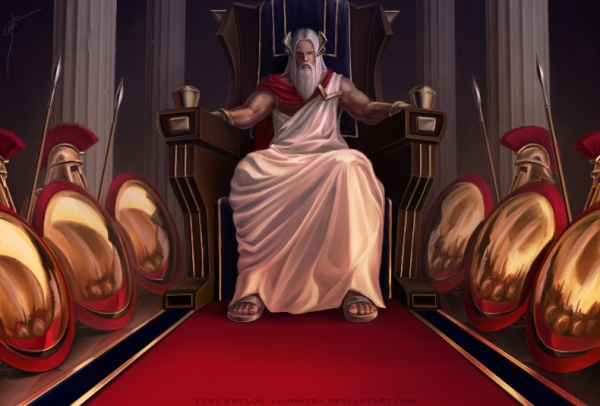
Zeus is the primordial god in Greek mythology and likely the most interesting one as a result. The god Zeus was created as the Greek version of the Indo-European sky god, related to other patriarchal sky gods such as Thor and Odin in the Norse Pantheon. The religion of Zeus very likely came about as... Continue Reading →
Ragnarok and Thorwald’s Cross
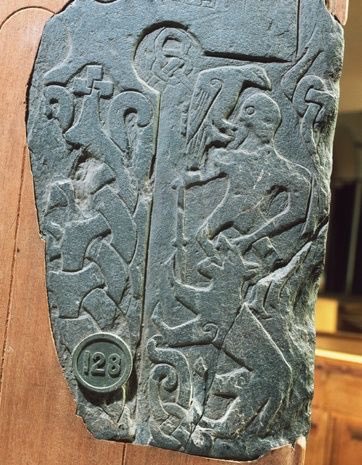
One of the most important Norse myths is Ragnarok, which tells of a terrible battle at the end of the world. In this myth, the gods Odin, Thor, Freyr, Tyr, and Heimdalr battle against Loki and Fenrir the Wolf, who have burst free, aided by Jormungand the Serpent, Hrim the Giant and Surt in the... Continue Reading →
China and India Creation Myth Comparisons
The creation myths from China and India show strong similarities, including the cosmic egg, the primordial beings, and the principle of opposites and chaos. Firstly, the cosmic egg is present in both. In the Indian Shatapatha Brahmana, the creator Prajapati broke out of a cosmic egg. In another Indian text, the Chandoyga Upanishad, a cosmic... Continue Reading →
Article Review: ‘Those same cursed Saracens’: Charlemagne’s campaigns in the Iberian Peninsula as religious warfare
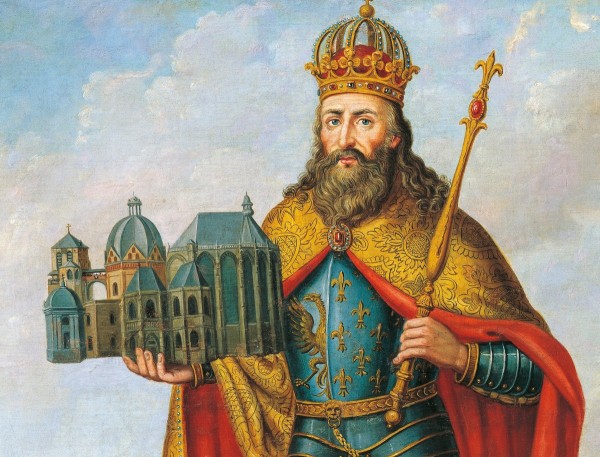
Generally, Charlemagne’s campaigns against the Saracens in the Iberian Peninsula have been understood as secular due to the general lack of evidence showing their religiosity as opposed to Charlemagne’s other religious wars. However, the author argues against this using primary and secondary sources from the Carolingian period. His thesis is that the observers of Charlemagne’s... Continue Reading →
Bellerophon Myth Character Analysis
In the myth of Proitos, Stheneboia, and Bellerophon, Bellerophon is the Hero, while Pegasus is his Ally. Proitos and Iobates both serve as the Heralds, while Polyeidos and Athena serve as Mentors. The Threshold Guardians include the Chimera, the Solymi tribe, the Amazons, and Iobates’ army. The Shadow is Stheneboia. All these characters possess qualities... Continue Reading →
Thor and the Greek Succession Myth compared
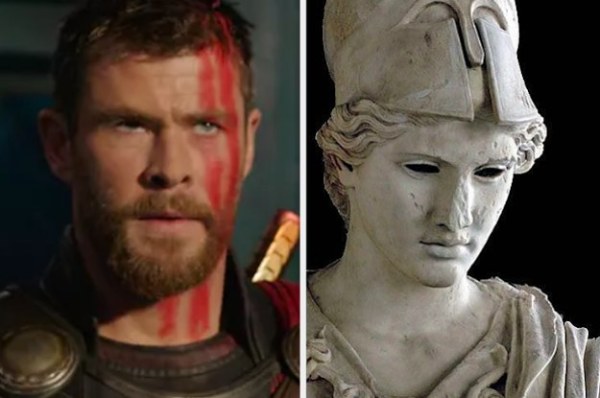
Succession Myth often narrates the passage of power from one generation to the next and the details of family dissent or disagreement, where the older generation ‘hates’ or resents the younger generation. Examine how this is evident in Thor. Include specific examples from the film to support your answer with APA style citations and... Continue Reading →
The Advanced Civilization of the Ancient Celts
Introduction The word “Celt” refers to a people in both modern and ancient times. The Celts today live in the British Isles, along with the Brittany region in the west of France. However, the ancient Celtic peoples were much more widespread, covering areas from Spain, France, the British Isles, Central Europe, Northern Italy, the Balkans... Continue Reading →
Why the Middle Ages were a Great and Important Time for Western Civilization: An Essay on Logical Thinking
Perhaps no other time in history is more misunderstood and underappreciated than the Middle Ages. In popular culture, the Middle Ages is depicted as a backward time with constant warfare and plagues where barely any great inventions were produced. On the other hand, the classical antiquity period of Ancient Greece and Rome is seen as... Continue Reading →