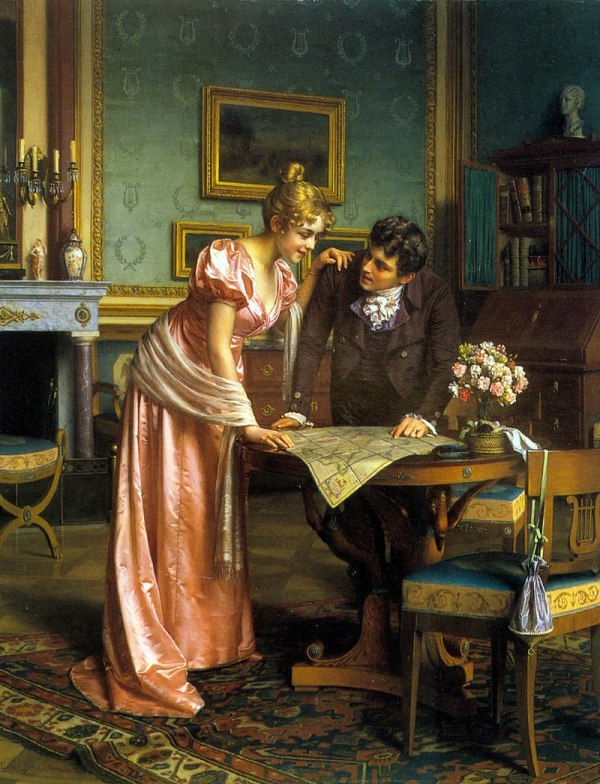
The English novels Emma, Jane Eyre and Middlemarch are all among the most famous of the 1800s and feature romances between main characters which are important for the story. Emma Woodhouse falls in love with George Knightley, Jane Eyre with Edward Rochester, and Dorothea Brooke with Edward Casaubon and then Will Ladislaw. These novels explore... Continue Reading →
Emma’s Journey to Individual Maturity & Love
The novel Emma by Jane Austen explores the life of the eponymous young woman in the village of Highbury. Emma Woodhouse is 21 years old and respected in her community, but also inexperienced in the world. She is close to Mr. George Knightley, a family friend, whose younger brother is married to Emma’s older sister... Continue Reading →
The Role of the Jews in the Glorious Revolution
The Glorious Revolution was one of the most significant events in English history. It was the last successful invasion of England and saw the replacement of the Stuart monarch James II with his daughter Mary and her husband William of Orange, who became King William III. This paper will argue that Jews played a crucial... Continue Reading →
Queen Elizabeth’s Role as a Female English Monarch
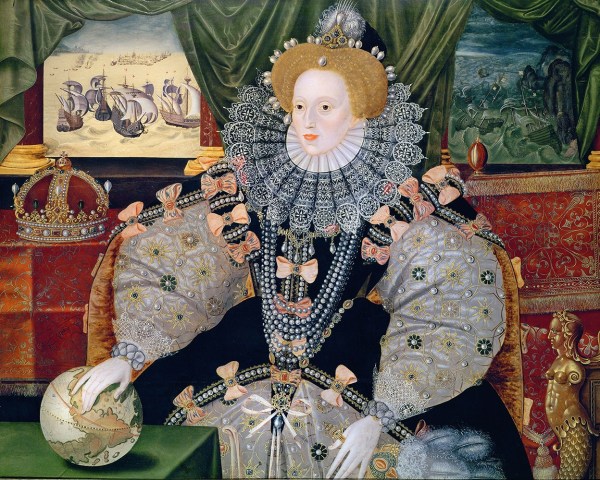
Queen Elizabeth I was one of England’s greatest monarchs, staying in power for 45 years, one of the longest reigns of any English monarch. But her rise to power was not easy, and she wasn’t even the first in line. Carole Levin’s Heart and Stomach of a King tells us the ways Elizabeth navigated the... Continue Reading →
Two Versions of King Arthur Contrasted
The story of King Arthur has been told in many different forms over the centuries. Two of the core seminal works are Sir Gawain and the Green Knight, a long poem from the 14th century by an unknown author, and Le Morte d’Arthur, a prose work from the 15th century by Thomas Malory. King Arthur... Continue Reading →
The Kilt God is Cast Down
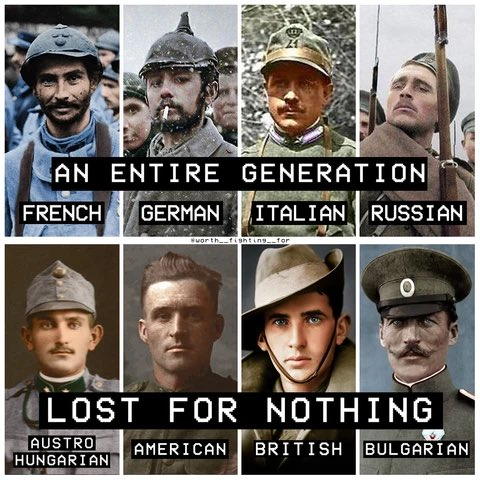
Wilfried Owen’s poem “Disabled” follows a soldier who has lost his legs during the war and is now alone and isolated. The poem uses images of color and temperature to show how the soldier changed before and after the war. The many colors and heat represent his innocence and vivacity, but after joining the military... Continue Reading →
Jekyll’s Fatal Voyage of Transcendence
Robert Louis Stevenson was a Scottish novelist, poet and travel writer who published a novella called The Strange Case of Henry and Jekyll in 1886. It is about a doctor called Henry Jekyll who separates himself into two beings. Through his investigations of the human psyche, Jekyll discovers that he is not simply one being,... Continue Reading →
John Keats’ Fear of Forgetting
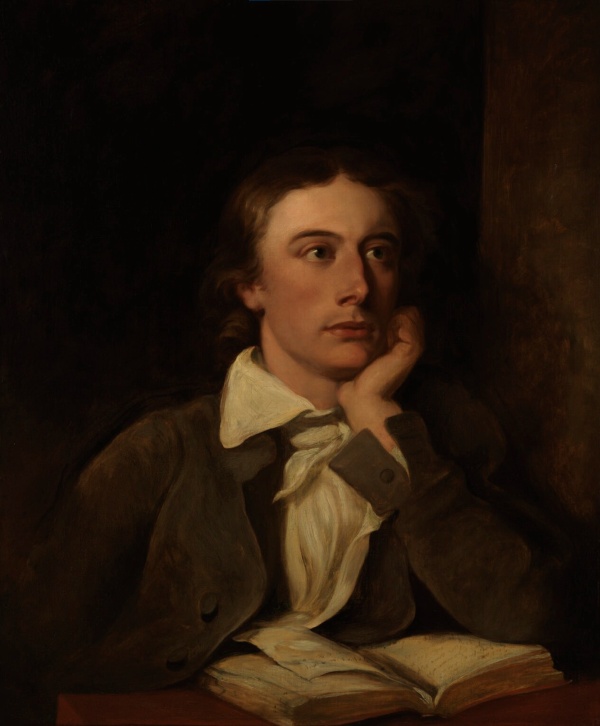
John Keats, “[When I have fears that I may cease to be]” When I have fears that I may cease to beBefore my pen has gleaned my teeming brain,Before high-pilèd books, in charactery,Hold like rich garners the full ripened grain;When I behold, upon the night’s starred face,Huge cloudy symbols of a high romance,And think that... Continue Reading →
The Dangers of the East in “The Speckled Band”
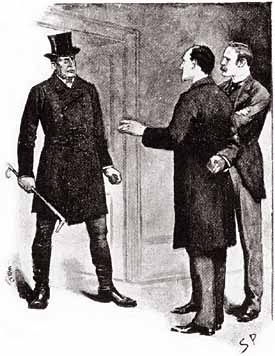
Arthur Conan Doyle’s “Sherlock Holmes: The Speckled Band” is a “locked room” mystery which sees the famed detective try to solve the mysterious death involving a “specked band” by the whim of Helen Stoner, who feels that her stepfather is attempting her murder so he can keep control of his inheritance. It is one of... Continue Reading →
Close Reading of “The Tyger”
William Blake’s “The Tyger” poem is arguably his most famous work in this form of literature and in all of English. It is about a person who wonders how a tiger is created, but it is not merely a fun poem. “The Tyger” is a discourse on duality, with a speaker who is shocked at... Continue Reading →