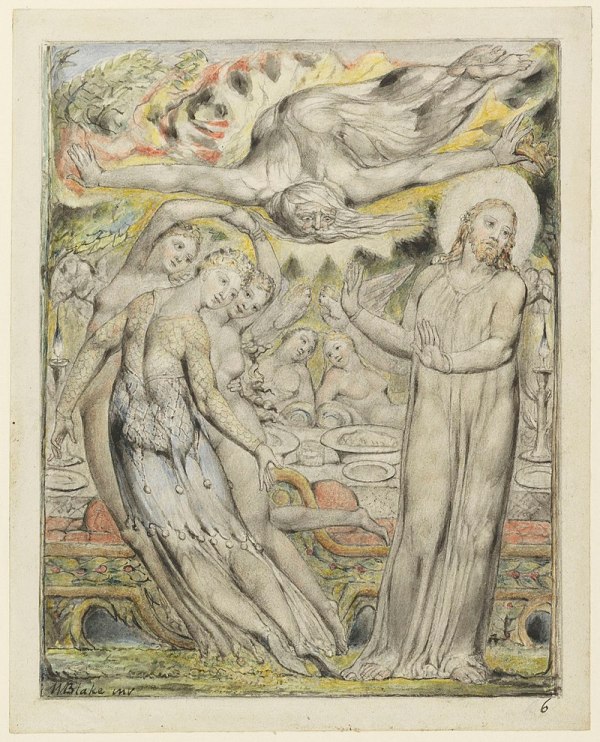
In John Milton’s Paradise Regained, Milton chooses the rather unexpected moment of Jesus’ retreat into the wilderness for Jesus’ greatest triumph: the regaining of Paradise. He portrays it as the antithesis to Adam and Eve’s temptation in Eden, and it is in this moment that Jesus is tempted with everything by Satan to take the... Continue Reading →
Eve’s Argument for Free Will & Reason in Paradise Lost
In Book 9 of Paradise Lost, Adam and Eve argue on whether to split up their work. Adam fears that Eve will be easily tempted if she leaves him. Eve argues that Adam needs to trust her and that untested faith and love is weak, echoing God’s and Milton’s beliefs on the importance of free... Continue Reading →
Satan’s False Opposition to Tyranny in Paradise Lost
In John Milton’s Paradise Lost, the semblance of hell, Satan and his fellow demons is often radically different from their substance. One strong example of this is in hell’s freedom. Satan claims that hell is a democratic form of government, but this is proven not to be the case through Satan’s tyrannical rule and his... Continue Reading →
Comparing and Contrasting Melancholy in Cavendish and Milton
In both John Milton’s Il Penseroso and Margaret Cavendish’s A Dialogue between Melancholy and Mirth, Melancholy is a mature intellectual pursuit imparting knowledge and virtue since the poets draw on its complex and multifaceted nature. But while Cavendish’s description of melancholic thoughts and actions is very generalized, Milton’s is more specific. This may be because... Continue Reading →
The Squire’s Tale as a Representation of His Character & Ideals
In Geoffrey Chaucer’s The Canterbury Tales, the Squire is one of the characters who gets to tell a tale. His tale is an interlaced romance, a common form in the Middle Ages which was very long. The exotic and fantastical setting of the Squire’s Tale reflects his ambition, talents and imagination, and while he does... Continue Reading →
Criseyde’s Tragic Journey to Love and Back
One of the English poet Geoffrey Chaucer’s most famous poems is Troilus and Criseyde, a retelling of the classic love tragedy poem. It is set amid the background of the Trojan War, but in a 14th century environment. In it, the Trojan prince Troilus falls in love with the Trojan noblewoman Criseyde. Criseyde is a... Continue Reading →
The Kilt God is Cast Down
Wilfried Owen’s poem “Disabled” follows a soldier who has lost his legs during the war and is now alone and isolated. The poem uses images of color and temperature to show how the soldier changed before and after the war. The many colors and heat represent his innocence and vivacity, but after joining the military... Continue Reading →
Close Reading of “The Tyger”
William Blake’s “The Tyger” poem is arguably his most famous work in this form of literature and in all of English. It is about a person who wonders how a tiger is created, but it is not merely a fun poem. “The Tyger” is a discourse on duality, with a speaker who is shocked at... Continue Reading →