The Aeneid is an epic poem by Virgil that tells an origin story of the Romans and was Rome’s national epic. One of the most famous episodes of the work is Aeneas’ tragic affair with Dido, which ends with Dido’s suicide. This essay will argue that Aeneas’ staunch inclination to following his pietas most strongly... Continue Reading →
Secondary Source Review: Seasons and Similes in the Aeneid
This source is an article about how seasons are used as similes in the Aeneid, by George Fredric Franko of Hollins University. The audience for the article is people who have already read the Aeneid, because the author does not analyze the similes in the order they appear in the story. He looks at autumn... Continue Reading →
The Freedom to Sin and Repent in Milton’s “Paradise Lost”
In his texts, Milton teaches that one is free to sin and suffer the resulting loss, but that loss is also part of growth, and one should repent so that new fruits can grow from the repentance. Adam and Eve ask God for forgiveness after their Fall and are given grace through Jesus’ sacrifice. But... Continue Reading →
Jesus’ Wilderness as an antithesis to Eden
In John Milton’s Paradise Regained, Milton chooses the rather unexpected moment of Jesus’ retreat into the wilderness for Jesus’ greatest triumph: the regaining of Paradise. He portrays it as the antithesis to Adam and Eve’s temptation in Eden, and it is in this moment that Jesus is tempted with everything by Satan to take the... Continue Reading →
Eve’s Argument for Free Will & Reason in Paradise Lost
In Book 9 of Paradise Lost, Adam and Eve argue on whether to split up their work. Adam fears that Eve will be easily tempted if she leaves him. Eve argues that Adam needs to trust her and that untested faith and love is weak, echoing God’s and Milton’s beliefs on the importance of free... Continue Reading →
Comparing and Contrasting Melancholy in Cavendish and Milton
In both John Milton’s Il Penseroso and Margaret Cavendish’s A Dialogue between Melancholy and Mirth, Melancholy is a mature intellectual pursuit imparting knowledge and virtue since the poets draw on its complex and multifaceted nature. But while Cavendish’s description of melancholic thoughts and actions is very generalized, Milton’s is more specific. This may be because... Continue Reading →
The Spots of the Dreamer in “Pearl”
In Part 16 of the Pearl poem, the Dreamer asks the Pearl-Maiden to show him the way to Jerusalem, but the Pearl-Maiden tells him the difference between the worldly and heavenly Jerusalems. This section is about the spots of man which keep him trapped in the worldly Jerusalem away from the heavenly one, and the... Continue Reading →
The Squire’s Tale as a Representation of His Character & Ideals
In Geoffrey Chaucer’s The Canterbury Tales, the Squire is one of the characters who gets to tell a tale. His tale is an interlaced romance, a common form in the Middle Ages which was very long. The exotic and fantastical setting of the Squire’s Tale reflects his ambition, talents and imagination, and while he does... Continue Reading →
Plato’s Explanation Of Why Art Is Useless in His State
Plato’s Republic is a Socratic dialogue on justice, how the perfect city-state should be ordered, and how the virtuous man should behave. In “Book X”, Glaucon and Socrates explore the nature of poetry. They argue that Poetry must be excluded from a well-ordered state, as it is an imitative art form, thrice removed from the... Continue Reading →
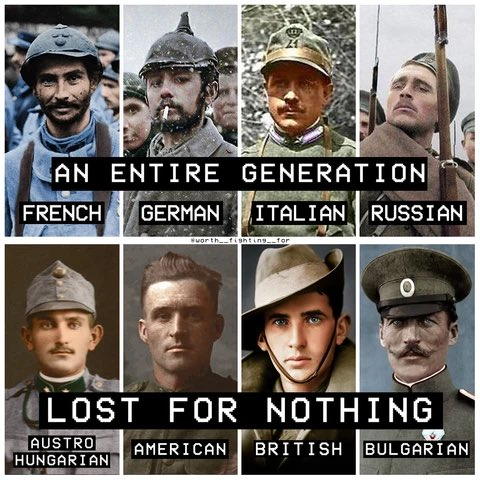
The Kilt God is Cast Down
Wilfried Owen’s poem “Disabled” follows a soldier who has lost his legs during the war and is now alone and isolated. The poem uses images of color and temperature to show how the soldier changed before and after the war. The many colors and heat represent his innocence and vivacity, but after joining the military... Continue Reading →