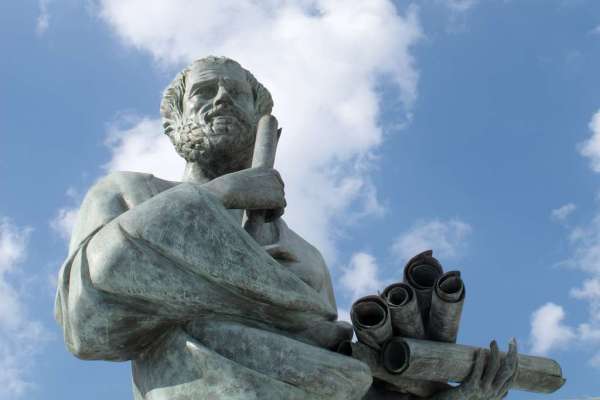
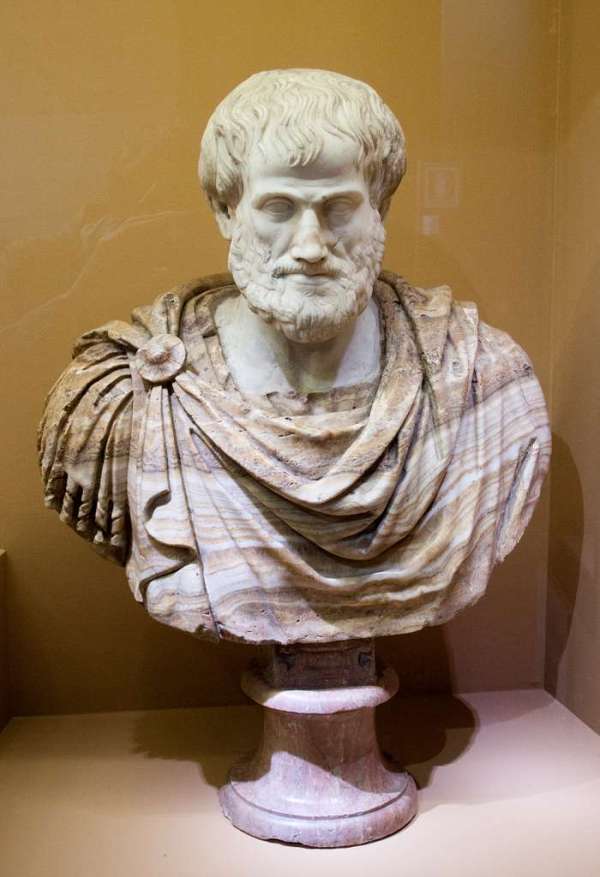
Aristotle (c. 384-322 BC) was an ancient Greek philosopher, perhaps the greatest in history. He invented the idea of separate academic disciplines, dipping his toes into philosophy, politics, ethics, biology, natural sciences, aesthetics, poetry, and metaphysics. In contrast to his master Plato, who focused on the ideal otherworld, Aristotle focused on the real, particular world.... Continue Reading →
The American post-WW1 debate between internationalism and nationalism
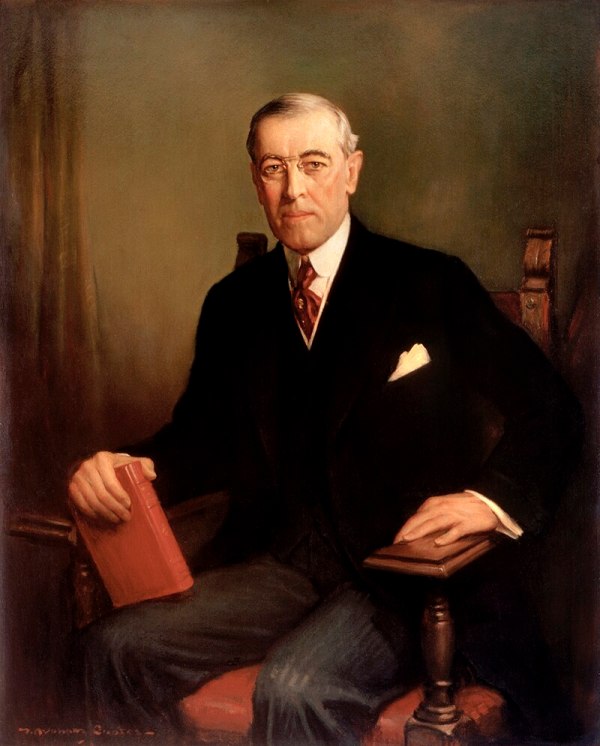
On January 8, 1918, during World War I which America had just entered nine months earlier, US President Woodrow Wilson outlined his vision of a post-war world in his “Fourteen Points” speech. He advocated for diplomacy, free trade, the creation of an association of nations, and the redrawing of national borders. But Wilson faced backlash... Continue Reading →
John Ponet and Jean Bodin on the nature of political power and sovereignty
In mid-16th century Europe, two intellectual groups, the resistance theorists and counter-revolutionary theorists, reconceptualized the nature of political power. They asked similar questions about the nature of society, government and the right of resistance, but came to very different conclusions. In 1556 the English theorist John Ponet published his Short Treatise on Political Power. Twenty... Continue Reading →