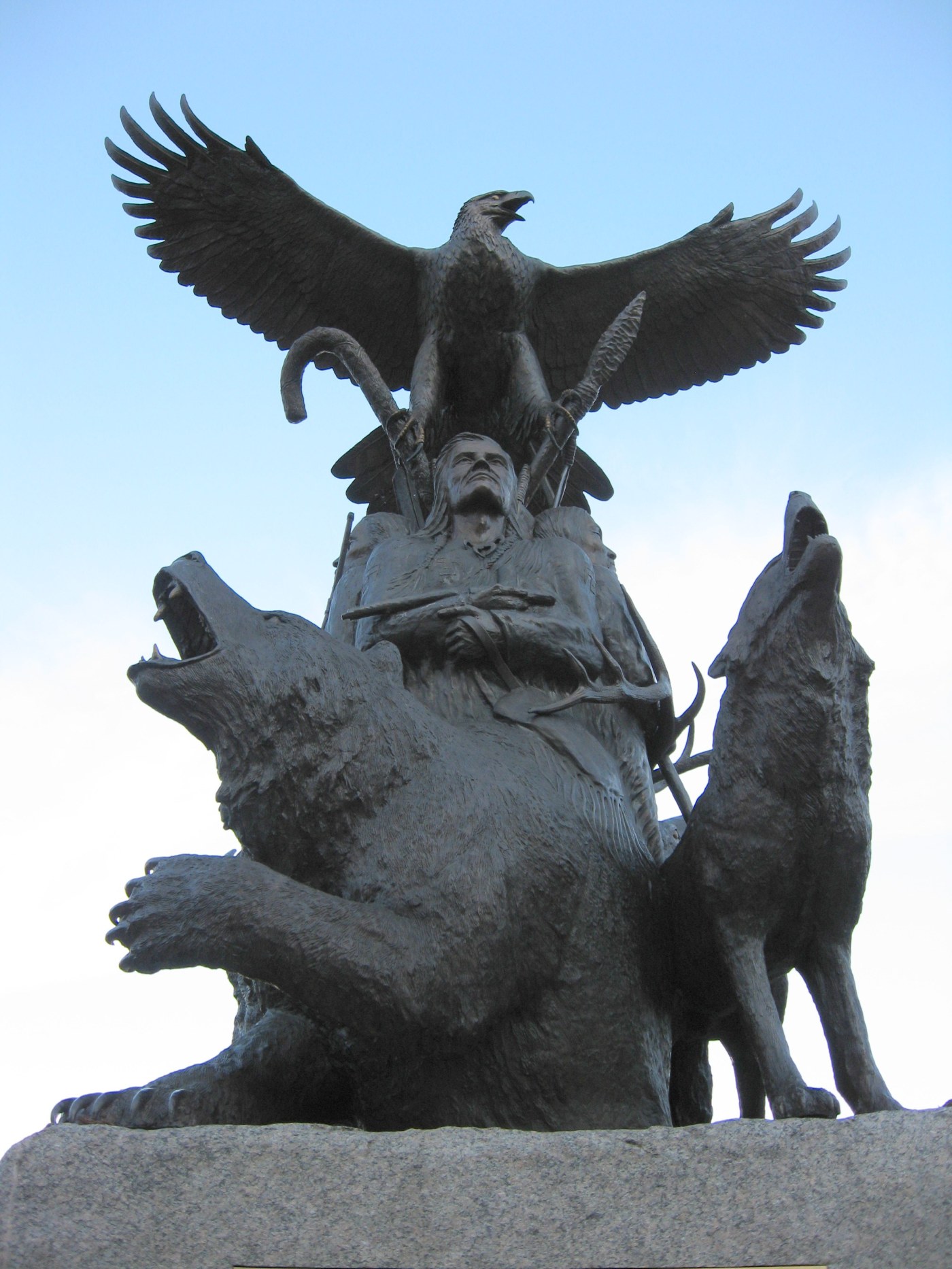
Long before the Europeans arrived in Canada, there were people already living here. Their ancestors were nomads who crossed the Bering Strait from Siberia around 20,000 to 40,000 years ago. These rugged and brave people settled in the frozen wastelands of northern Alaska and the Yukon. It is a wonder that they were able to survive among the harsh temperatures and uncongenial winds. Trapped in the continent, these first “Canadians” created a notable survival technology tailored to the hostile environment. Vestiges of their ancient culture remain in Canada and their descendants became the Inuit.
The Inuit: The ancestors of today’s Inuit needed to be smart and resourceful to prosper in the continent they had just arrived in. Inuit culture is concerned with survival most of all.
The Arctic Inuit are known for their austere cooking and hunting tools. The family dinner was caught with bows and arrows crafted out of flint, ivory or bone. The Inuit also created special tools for the seasonal changes, and continue many of these techniques today. Their clever winter ice-spears have tiny feathers or hairs fastened to one end, and the hunter holds the hairs over a hole in the ice until a movement gives away the presence of an animal. But they would have to spend several hours sitting over a hole in the freezing cold.
The Inuits not only had a daily problem with finding food, but were also greatly obsessed with it. Blubber, meat and fish, core foods, were always eaten raw (when it was nourishing). Half-digested lichen found in a caribou stomach was believed to be a delicacy and could bring more flavor to a meal. When natural food sources had been extinguished, families would pack up and head to another area often on sleds made of hides or frozen fish. The fish could be eaten if necessary.
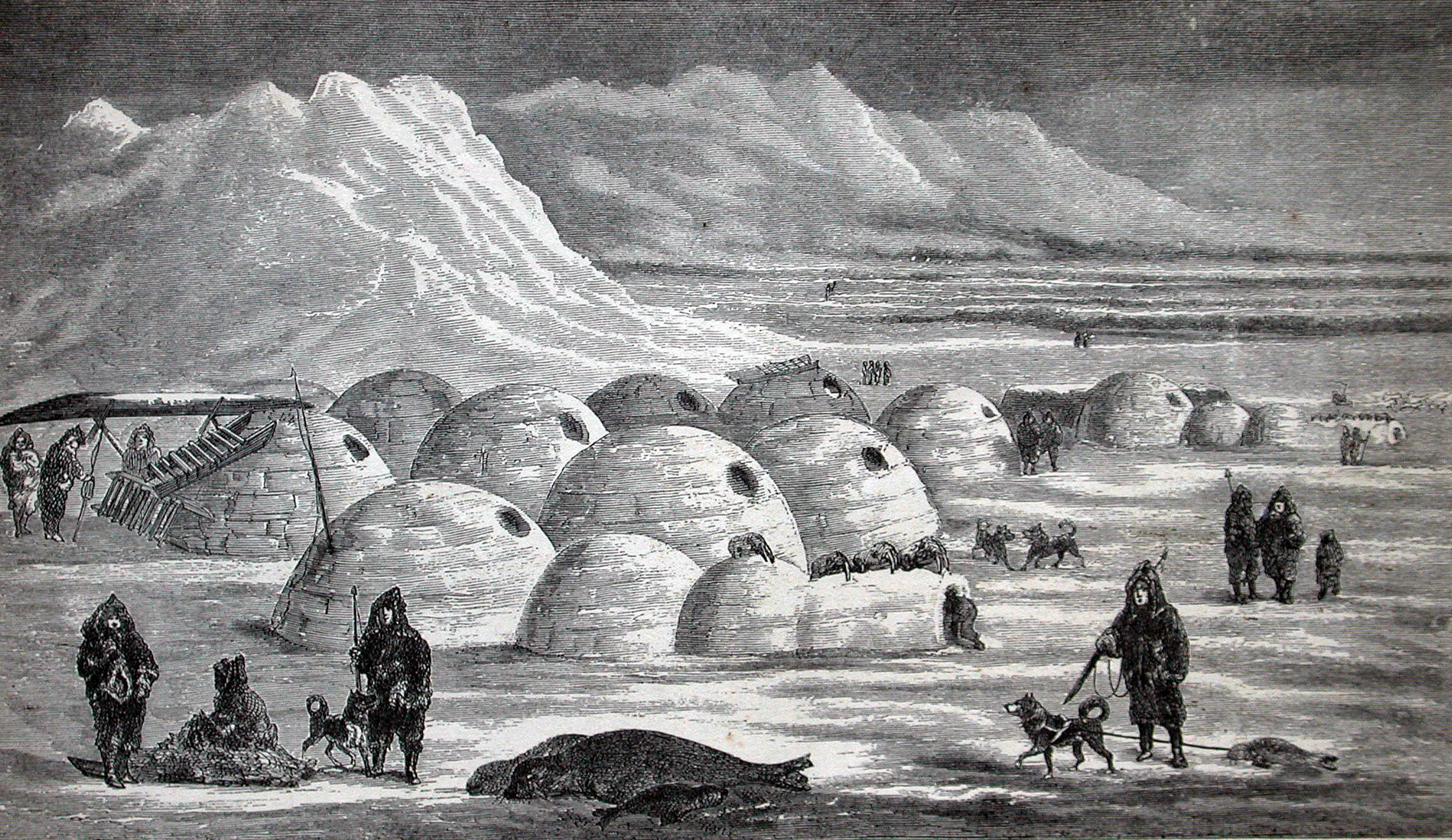
The lack of trees and their timber limited the ability to build huts, but snow was plentiful. Snow blocks formed the igloo, a shelter that today’s Inuit still use. One or two connected rooms make up the interior. A platform for sleeping or working stands across from the entrance way, with an area for animal carcasses and a heating lamp finishing the layout. Anthropologists who have stayed in these structures consider them warm and comfortable.
The early Inuits had 300 words for snow but none for chief or ruler. The group held authority, someone could take increased authority or domination but never at the expense of the group: it had to have harmony.
The Inuit formed a religion that mirrored their beliefs about their difficult, cold environment and life. In a world with malevolent spirits, people needed “luck” to survive, and if it ran out, they died. Yet today’s Inuit, who live the same life if they are unaffected by colonialism, are known for their cheerful personalities. Many Inuit will say: “If you knew of the dangers I live through each day, you would understand why I am so fond of laughter”.
West Coast tribes: The West Coast was home to many Aboriginal populations, including the Kwakiutl, Bella Coola, Nootka, Haidas, and Tlingit. These peopled found that the Pacific coast was filled with natural resources.
Cod, halibut, salmon and edible kelp was found in the sea, water animals provided furs, and the forests were home to beavers, deers and bear. The Northwest aboriginals put the timber to good, abundant use: they created large, dug out canoes often reaching 66 ft (20 metres) in length and wooden huts 270 ft (80 metres) long.
The abundant food and building materials allowed Northwest Coast peoples to devote much time to creative endeavors. Their styles and techniques continue to be used today and visitors to the museums and craft reserves identify one core style in their crafts: the ubiquitousness of animals, mythical creatures with projecting canines; and strangely painted human figures. Depicted on totem poles, houses, canoes and bowls, the beings are believed to be supernatural ancestors who have chosen specific artists to paint them. Like European crests, these figure motifs came to represent certain lineages along with rank, wealth and standing.
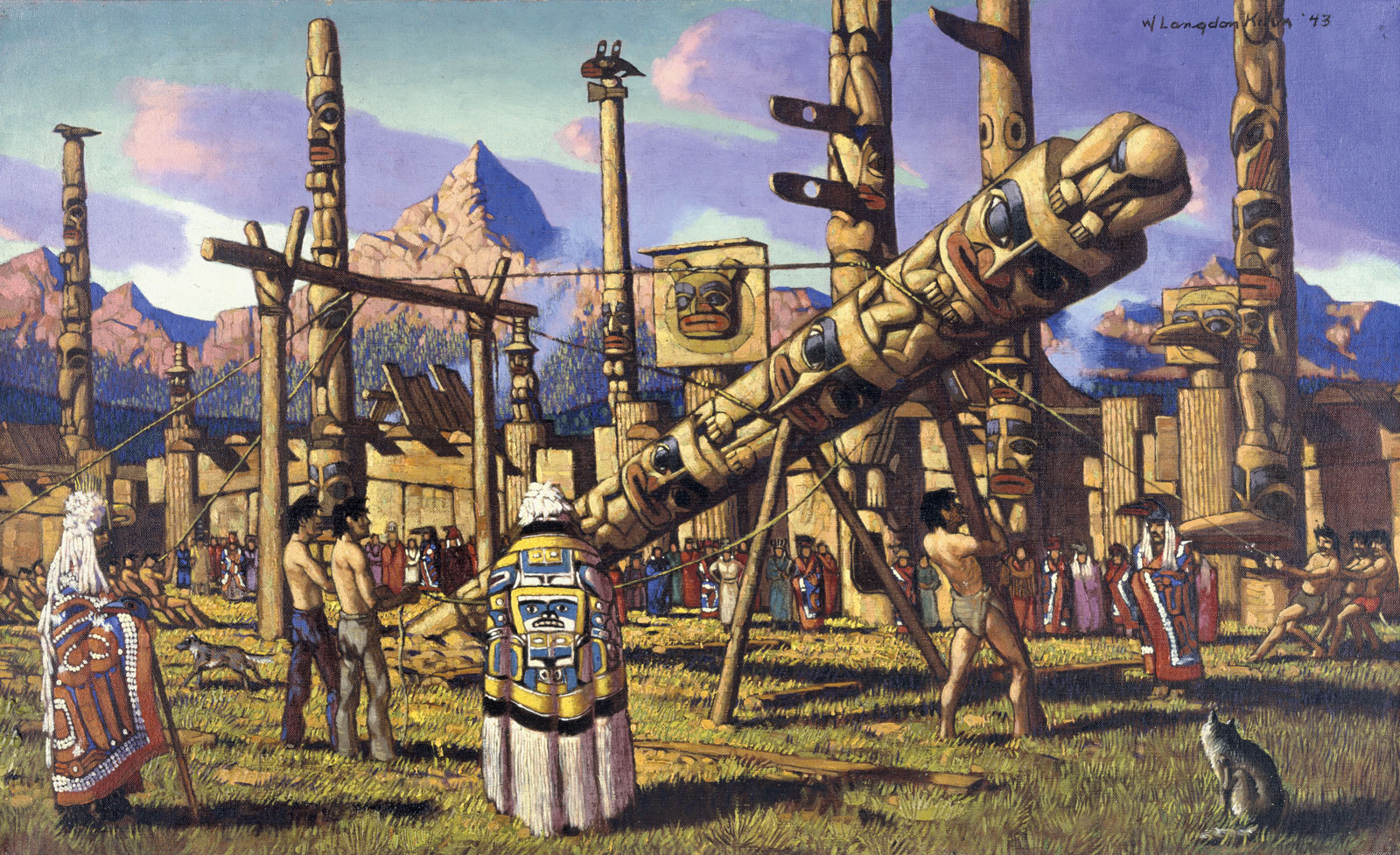
The wealth and artistry of the Northern Coastal peoples spawned a vigorous system of trade among tribes, and this network would later be central to the fur trade. Nootkas were known for whale products while the Haidas built many ceremonial canoes. There was also a slave trade. This created an advanced system of interchange. Later colonists saw that these Indians had a focus on what they considered private property and material wealth.
The potlaches were exchange ceremonies that a chief and his local band hosted gave for another chief and band. Each guest received huge numbers of gifts, with their value depending on the guest’s position. After a big feast, there would be long speeches. The celebrations would usually commemorate a fluctuation in the status of a person in the hosting group such as an inheritor getting an inheritance, But usually, if only one position was available for two men to inherit, competing potlaches would be held. They often included property sabotage by arson or demolition, and sometimes slaves would be killed as well (Europeans would later abolish this). The potlaches would not end until one participant was financially ruined and forced to renounce his claim.
Plains Indians: They included the Blackfoot, Sarcee and Assiniboine tribes. Because their languages were mutually unintelligible, sign language had to be used to help trade. Yet the tribes’ common dependency on the buffalo connected them. The buffalo was central to life: it provided pemmican (a food heavy on protein that Indians carried during their travels); skins turned into blankets, clothes and tent coverings; and buffalo hair that was dried and could be woven into rope or used to fill moccasins.
Before the adoption of the horse in the late 18th century, the buffalo had to be hunted on foot, usually by forcing them to run into a compound. This practice, known as “buffalo jumping”, involved everyone in the group – a herd was chased towards an enclosure surrounding a pit. One person, usually the fastest, would wear a buffalo hide and simulate the animal’s movements, attempting to draw the herd towards the pit. Once inside the enclosure the buffalo would fall into the pit (7 or 8 ft/ 2.5 metres deep) and break their necks and legs. Afterwards, they were shot with arrows, butchered and later consumed.
The Plains Indians had to be nomadic to chase the wandering buffalo herds. This required a mobile house: the tepee. A hut with a conical shape and an opening at the tip to let out smoke, the teepee was not only pragmatic but sacred. The floor of the tepee symbolized the earth of mortal life, and the top the sky of the gods. The roundness of the tent represented life’s sacred circle which had no beginning and no end.
Before the arrival of the Europeans, the fur trade and its associated competition, the Plains Indians stayed rather broadly organized and pliable. The leader formed the band’s political unit, and when many of the bands united, the leaders formed a council. It would behave as a guiding and organized band leading the actions of the groups during trading ventures, wars and celebrations.
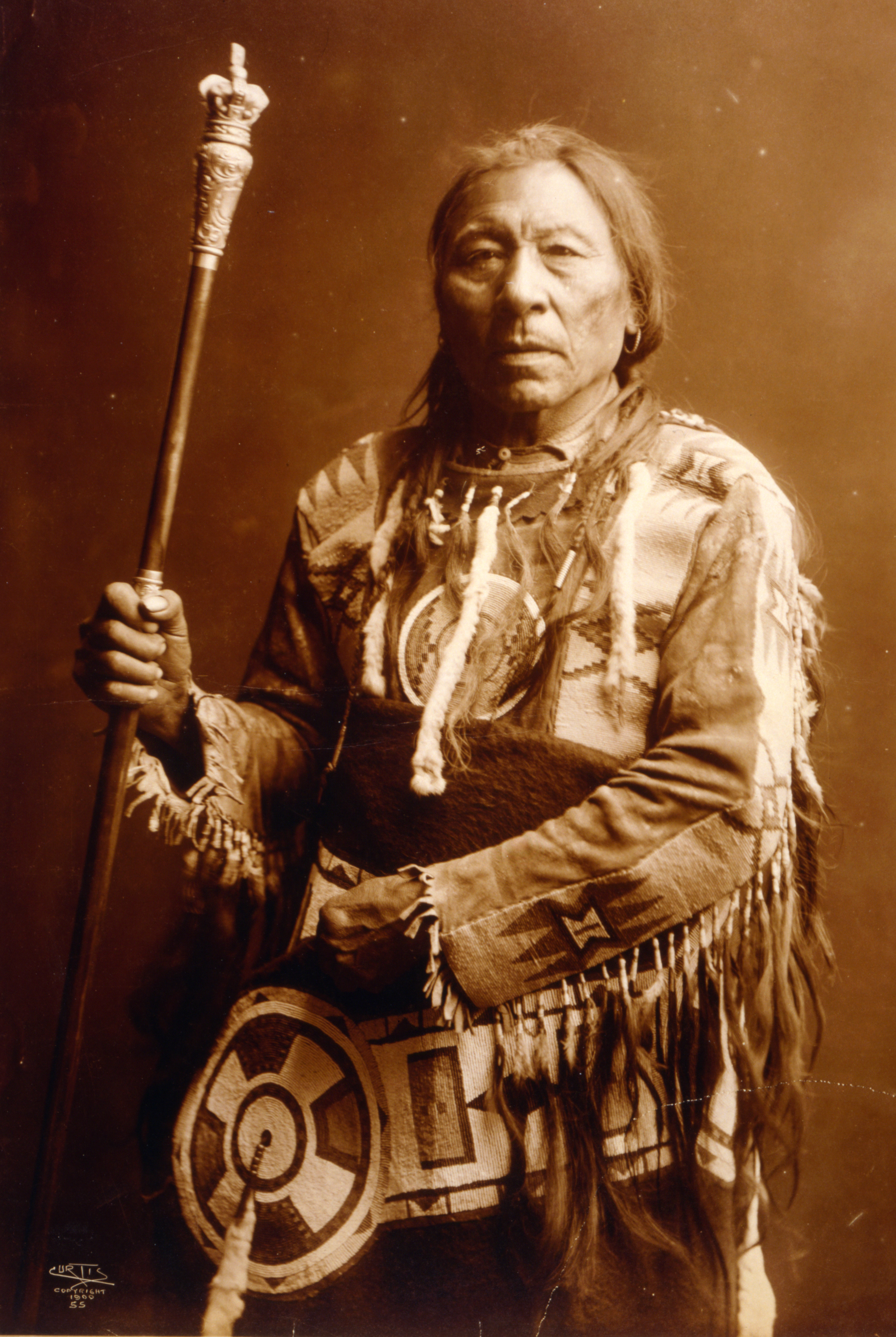
One of the Plains Indians’ most famous celebrations was their Sun Dance, held every 2-3 years. A sacred pole would be set up to the Great Spirit and gifts of food and decorated objects would be tied to the pole. The bands danced around the pole, recounted war deeds, and prayed for guidance in their buffalo hunts. Plains youth often engaged in rituals of self-mutilation, with one of them including the stabbing the chest with skewers which were tired to the pole with leather thongs. The youth pulled at the skewers until he either fainted or ripped the thongs off the stake, believing that the self-inflicted torture praised and impressed the Great Spirit.
Eastern tribes: Semi-nomadic bands settled the woodlands of eastern Canada in 1000 BC or earlier. The peoples of this area included the peaceful Huron, the warlike Iroquois, and the enterprising Algonquians. They made full use of their environment like the rest of Canada’s Indians. In southern and central Ontario, the Hurons were horticultural, cultivating the land and planting squash, beans, and maize: the “Three Sisters”. They lived in longhouses surrounded by palisades. French missionaries were bewildered by the Huron, who showed an equality between the sexes and a consent-based form of government.
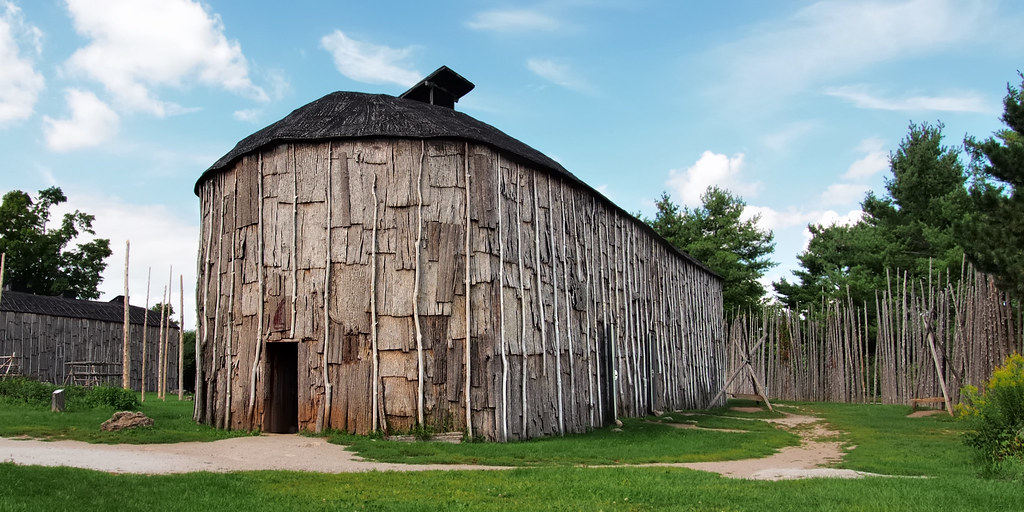
The Indians had four standards for choosing a site for their village: access to water, proximity to forests for timber, rich soil for cultivation, and suitability for defense. Archaeologists also use these criterion for finding villages.
The Jesuits wrote about their horror at the village’s living conditions. Samuel de Champlain, disapproving of what he saw as filth and grime, wrote of the longhouses sheltering two or three dozen people. He especially focused on how the smoke from the longhouses’ fire ” circulates at will, causing much eye trouble, to which the natives are so subject that many become blind in their old age”. The Indian ways of communal sharing and sanitation were very different from the individualistic ways of the Europeans. But Indians did not often die of disease until the Europeans accidentally brought their viruses and decimated them.
The Iroquois were Canada’s only Indians to believe in a good Great Spirit and an evil one. Their religion had the two deities constantly fighting each other, and their myths usually reflected this. Before the Europeans came the Iroquois had created a proto-empire of sorts: they had formed a confederacy of many nations of tribes, a currency called wampum that controlled trade, and they had arranged the confederacy for battle against enemy tribes.
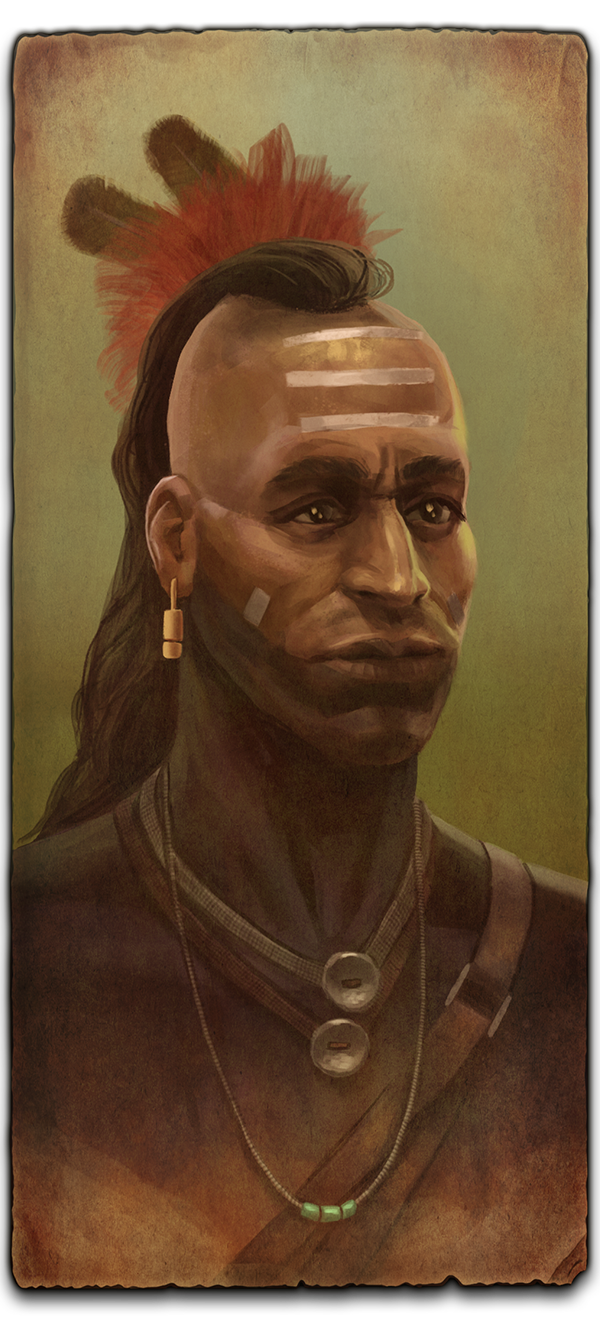
The Europeans found a massive land populated by many different Indian groups, each of them accommodated to a specific lifestyle.


Leave a Reply